
Kakum National Park
The Kakum National Park is a protected area located in the coastal region of Ghana. Covering 375 square kilometers, it was originally established as a reserve in 1931 before being designated a national park in 1992. The park’s tropical forest is its defining feature. Unlike other national parks in Ghana, Kakum was founded at the urging of local residents rather than the government’s wildlife department. A highlight of the park is its 350-meter-long canopy walkway, which connects seven tree tops and is one of just three such structures in Africa. The park is also home to several endangered species, including the Diana monkey, giant bongo antelope, yellow-backed duiker, and African elephant. Kakum is an Important Bird Area with 266 bird species identified, including eight of global conservation concern such as the white-breasted guineafowl. The park also boasts a thriving butterfly population, and a new species was discovered there in 1993. Kakum National Park is home to the densest population of forest elephants in Ghana. The Museums and Monuments Board of the Republic of Ghana has nominated the park for UNESCO World Heritage Site status under criteria vii and x, and it has been included on the tentative List of World Heritage Sites since 2000. History The Kakum River headwater catchment area was established as a forest reserve and placed under the management of the Forestry Division in 1931. During this period, logging activities were common, especially of the Khaya ivorensis or mahogany tree species. Logging continued until 1989 when the reserve’s management was transferred to the Wildlife Department. In 1990, a feasibility study and preliminary management plan for the development of the Kakum National Park as an ecotourism destination were conducted under a United Nations Development Program project. The study involved biodiversity assessments of the flora and fauna of the Kakum Forest Reserve and the adjoining Assin-Attandanso Forest Reserve, as well as an elephant population survey. The development of the management plan was a collaborative effort involving forestry and wildlife officials, local communities, Ghanaian universities, regional government officials, and other stakeholders. Mr. Ebenezer Kwasi Agbley, the then Central Regional Manager for Ghana Tourist Board, initiated and implemented the Tourism Development Scheme for Central Region (TODSCER) program, which birthed the dream of developing Kakum National Park. The program was showcased in America, attracting support from bilateral and multilateral donor institutions, and was later expanded to become the Central Region Development Program under the Central Region Development Commission (CECECOM). Game & Wildlife later came on board to manage and maintain the park. In 1992, the Wildlife Department designated Kakum as a park under the Wildlife Reserves Regulations (Ll 1525) as the Kakum Conservation Area, including the Assin Attandanso Forest Reserve. After conducting a survey of the conservation area’s fauna, it was split into the Kakum National Park and the Assin Attandanso Forest Reserve during the same year. The split was deemed necessary to meet the demand for timber from the forest and the potable water provided by the Kakum River in Cape Coast and 33 other towns and villages. Tourism Kakum National Park in Ghana offers visitors a unique and unforgettable experience with its diverse flora and fauna, as well as a chance to explore the park’s lush tropical rainforest canopy. Here are some reasons why people should visit Kakum: Overall, visitors can expect to have an unforgettable experience at Kakum National Park, filled with adventure, education, and appreciation for the natural world. READ NEXT ON: Wechiau Hippopotamus Sanctuary
Carlos Calony named Best Journalism Student at UniMAC Graduation
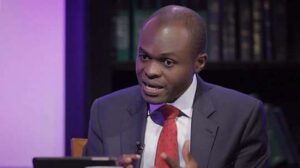
Carlos Lorlornyo Atsu Calony popularly known as just Carlos Calony, and former MX24-TV news anchor, has been awarded the Overall Best Student in Journalism at the UniMAC graduation ceremony for the 2021/2022 academic year. The prestigious award recognizes Carlos’s outstanding academic performance and dedication to his studies throughout his time at the Ghana Institute of Journalism. As part of his award, Carlos will be traveling to South Africa on an all-expense paid trip. The journalist, who is popularly referred to as Carlos Calony in the media space, expressed his gratitude to God and all those who supported him throughout his educational journey. Despite having to balance work, social events, family, worship, and studies, Carlos was able to triumph over the difficulties and achieve his goals. Carlos took to Facebook to share his excitement, saying, “I pushed through it all, sacrificing and even making some people uncomfortable. But here I am, achieving what first seemed impossible four years ago. This journey has taught me valuable lessons and skills that will serve me well as a professional journalist. I remain grateful to UniMAC-GIJ for the opportunity and the recognition.” In addition to his award, Carlos has also been shortlisted for the highly coveted 2022 BBC Komla Dumor Award, which recognizes exceptional journalism from Africa. Carlos is currently enrolled at the same university, pursuing a Master’s degree in Public Relations and Marketing, and his academic success serves as a testament to his commitment to his education and his passion for journalism. READ NEXT ON: Twin Doctors Graduate Together in Ghana
The Evolution of Agbadza Music and Dance
Agbadza, a popular Ewe music, and dance, originated from the times of war and has evolved into a well-liked recreational activity. Its roots can be traced back to a historic war dance called Atrikpui, and it is mainly performed by the Ewe people of the Volta Region of Ghana during the Hogbetsotso Festival, a celebration by the Anlo Ewe community. It is also commonly performed by individuals of Ewe descent from Togo and Benin. The dance consists of five movements, beginning with Banyinyi, a short prayer to the gods and ancestors, followed by the main dance, Vutsortsor. The third movement, Adzo, is less energetic, and only the master is allowed to drum along with Gankogui and Axatse. The fourth movement, Hatsatsa, involves the performance of historical songs alongside Gankogui and Atoke. Finally, the dance ends with another round of the main dance, Vutsortsor, which can last for several hours. Gankogui, an instrument in the form of a bell played using a stick, and Atoke, an iron bell shaped like a banana, played with a small forged iron rod, are both used for the same purpose. Agbadza is a dance performed at various events such as funerals, weddings, and parties. It serves as an Ewe identity emblem and is widely recognized as a unique aspect of Ewe culture. Unlike other Ewe dances, which are sometimes reserved for certain age groups, religions, or genders, anyone can join in the Agbadza dance. The dance is sometimes referred to as the “chicken dance” due to the bird-like movements required for the performance. Origin Agbadza has its roots in times of war when the Ewe people experienced various conflicts and oppression before settling in the Volta Region of Ghana and Southern Togo. The Ewe used songs and dances to motivate and prepare their warriors for battle, resulting in the creation of a dance called Atrikpui. Over time, Atrikpui evolved into Agbadza, which is now primarily used in joyous events. In the past, during the Atrikpui era, Ewe singers and poets used Agbadza to sing about various themes such as battles, life and death, heroism, cowardice, migration, conquest, imperialism, and a warrior ethos. With a period of peace in the 1920s, the Ewe transitioned towards using some of their old songs as entertainment, leading to the popularity of Agbadza as the most widely played Ewe dance today. Instruments The music of Agbadza is created through the use of various instruments, each with its own unique role in the ensemble. The Bell is one such instrument that plays a crucial role in setting the tempo of the song. It provides a recurring phrase that serves as a timeline for the rest of the ensemble to follow. This helps to establish the rhythm of the song and ensures that all the other instruments and dancers are in sync. Another important instrument in the Agbadza ensemble is the Sogo. This drum serves as the leader of the ensemble and is responsible for indicating to the other drums what they are supposed to be playing. It also communicates with the dancers through the use of drumming language, signaling when they are supposed to start dancing. The Kidi is another drum in the ensemble that plays a vital role. It communicates with the Sogo to create a conversation using drumming language, adding depth and complexity to the music. The Kagan is a support drum that has a recurring rhythm throughout the performance. It interacts with the Bell to create a specific melody, adding to the overall musical texture of the song. The Rattle, also known as the Axatse, is a beaded instrument that follows the rhythm of the timeline closely. It complements the Agbadza song, adding a unique sound to the overall ensemble. In addition to these instruments, handclaps are also used in Agbadza. They are used to add human interaction to the song and create a dense musical texture of high energy. Together, these instruments and elements create the unique sound and rhythm of Agbadza, making it a beloved and widely celebrated dance across the Ewe people of the Volta Region of Ghana, Togo, and Benin. READ NEXT ON : Background & History of Kpanlogo