
Meet Louise Carol Serwaa Donkor [Ph.D.], University of Ghana First Female SRC President

Louise Carol Serwaa Donkor [

Louise Carol Serwaa Donkor stands as a beacon of excellence, wielding her academic prowess and leadership abilities to drive impactful change across various domains. As the first female Students’ Representative Council (SRC) President at the University of Ghana, she laid the foundation for her remarkable journey in leadership and activism. Her academic journey began with a Bachelor of Arts degree in Political Science and Psychology from the University of Ghana, where she displayed outstanding leadership as the Elected Female President of the SRC, pioneering a new era of student representation. Her pursuit of knowledge led her to the University of Liverpool, where she obtained a Doctor of Philosophy (Ph.D.) in Communication and Media Studies, specializing in Gender and Politics. Her thesis delved into the intricate relationship between gender, media, and politics, with a specific focus on gender discourse within Ghanaian news media. Donkor’s professional trajectory showcases her commitment to effecting positive change. She has contributed significantly to Ghana’s development through her roles in various governmental and non-governmental organizations. As the National Coordinator for the National Alternative Employment and Livelihood Programme, she spearheads initiatives aimed at rehabilitating degraded lands due to illegal mining activities and creating alternative pathways for the youth in mining communities. Her tenure as the Deputy Administrator at the Minerals Development Fund saw her manage mineral royalties for developmental initiatives that directly benefited mining communities in Ghana. Additionally, her contributions as the Policy, Partnerships, and Communications Analyst at the Office of the President of Ghana were instrumental in accelerating the implementation and financing of the Sustainable Development Goals (SDGs). Notably, Donkor’s impactful initiatives as the Founding Director and Chief Gender Officer at the Aya Institute for Women, Politics, and Media are commendable. Under her leadership, the institute launched various programs, including the Gender Diversity Baseline Study across crucial sectors in Ghana, the Gender Equality Workplace Report for Ghana Club 100 companies, and the Running Abled Programme, among others. Her international engagements as a Research Consultant at Liverpool John Moores University and a Gender Consultant for Deutsche Gesellschaft für Internationale Zusammenarbeit (GIZ) GmbH highlight her commitment to global partnerships and gender-responsive projects. Furthermore, her tenure at Afric Xpress Limited as Merchants Acquisition and Public Relations Officer showcased her astute business acumen and managerial skills, significantly expanding the company’s business in the financial sector. Donkor’s dedication to research and communications is evidenced by her contributions as a Research Logistics Consultant at Imani Centre for Policy and Education, a Research and Communications ST Consultant at the World Bank Group, and a Global Partnerships Consultant for Women Thrive Worldwide in Washington, DC. Her illustrious journey, blending academia, leadership, and advocacy, underscores her unwavering commitment to effecting positive societal change. Louise Carol Serwaah Donkor’s impressive career trajectory and multifaceted contributions mark her as a visionary leader and an advocate for sustainable development and gender equality in Ghana and beyond. READ NEXT ON: Meet Akwasi Frimpong, Ghana’s First Skeleton Athlete

Adekunle Olopade, the Rising Star

Adekunle

As a proud Ghanaian dedicated to showcasing the best of our country through my blog, I couldn’t help but step in and share my thoughts about the overlooked gem, Adekunle Olopade. In the midst of the Big Brother Reality show, his journey didn’t quite receive the equitable attention or recognition compared to other housemates. Undeniably, this imbalance in attention became the catalyst for his growth, turning criticism into strength, and forging his path as a rising star. Adekunle faced undue criticism for trivial aspects that, unbeknownst to many, fueled his determination to excel. Contrary to hindering his progress, these critiques served as stepping stones, molding him into a stronger, more resilient individual. Despite the initial lack of recognition, Adekunle’s perseverance and talent were unwavering. His presence in the entertainment industry is nothing short of promising. He possesses a wealth of talents that are gradually unfolding, showcasing his versatility across various domains. Whether it’s his enthralling performances, magnetic screen presence, or articulate hosting skills, Adekunle exemplifies the epitome of versatility and promise. Adekunle’s unique ability to make a lasting impact through his talent is a testament to his dedication and unwavering resolve. His journey to the limelight has been steady, yet inexorably inspiring. The anticipation from the world for the brilliance he’s destined to unveil is palpable. In time, Adekunle will soar higher, like a shooting star in the sky, and his ascent won’t escape the notice of those who once overlooked him. He’s destined to ascend beyond the realm of earthly trivialities, captivating the gaze of admirers from afar. His trajectory promises to leave an indelible mark, showcasing a talent that transcends the ordinary and ascends to the extraordinary. Dear Adekunle, If ever you find yourself feeling down or overlooked, remember the unwavering support you have from me. Among the countless individuals cheering for you: If there are a million people supporting you, I am one of them. If there are thousands rallying behind you, I am one of them. If there are hundreds affirming their support, I am one of them. If there are ten standing strong for you, I am one of them. If there is just a single person championing your cause, I am that one. Know that not a single day will pass without my support being firmly by your side. Keep soaring BBD. READ NEXT ON: What it means: “Friends can make you or mar you”

Ghanaian actor Danso Sakyi, famously known as ‘Chief’ from the YOLO Series, Starts New Role at Imperial College London as Research Communications Lead

Danso Sakyi

Ghanaian actor Danso Sakyi, fondly known as ‘Chiiief’ or King George from the beloved YOLO series, has unveiled an exhilarating shift into the realm of research and communications. Sakyi is stepping into the role of Research Communications Lead at the esteemed Neonatal Medicine Research Group based in Imperial College London. In a recent LinkedIn post, Sakyi shared his enthusiasm for this significant leap in his professional journey, expressing, “I am incredibly thrilled to embark on a new adventure as the Research Communications Lead of the vibrant Neonatal Medicine Research Group at Imperial College London.” Sakyi’s academic triumphs have been a source of celebration. Previously the head of media production at Pave Network, the actor recently graduated with distinction from the Business School for Creative Industries at the University for the Creative Arts, securing a Master’s degree in Global Media Management and earning recognition as a Chevening Awards scholar. His transition from the entertainment industry to academia has garnered widespread interest and applause from fans and peers. It underscores his commitment not only to excelling in media production but also to pursuing knowledge and scholarly endeavors. Assuming the role of Research Communications Lead at Imperial College London, Sakyi is poised to offer a fresh and innovative perspective to the Neonatal Medicine Research Group. His distinct background in creative industries and media management, coupled with newfound academic expertise, positions him as a valuable resource in effectively bridging the gap between research and communication. As Danso Sakyi embarks on this thrilling new phase, he reflects on his academic achievements, expressing gratitude for the opportunities that have come his way. His seamless transition from the entertainment industry to the academic sphere highlights the depth and versatility of his exceptional talents. For more update on Danso, you can follow him on chiiief. (@_chiiief) • Instagram photos and videos READ NEXT ON: Stephen Apemah-Baah: Freshman Taking Opoku Ware to NSMQ Final

Ghanaian Cuisine: Kpokpoi

Kpokpoi

Kpekple, also known as kpokpoi, stands as a cherished dish among the Gas of Ghana, typically relished during the Homowo festival—an event signifying the “hoot at hunger.” This delightful meal incorporates steamed and fermented cornmeal, complemented by palm nut soup and smoked fish, creating a distinct and flavorful culinary experience. During the festivities, the chief often sprinkles kpekple, symbolizing an offering to please the ancestors. Ingredients for Kpokpoi How to Prepare Kpokpoi Embrace the rich flavors and cultural significance of Kpokpoi, a cherished culinary delight steeped in tradition and enjoyed during festive celebrations!Image Credit: Sweet Adjeley READ NEXT ON: Ghanaian Cuisine: Shito

History of the Ga-Adangbe People

Ga-Adangbe People

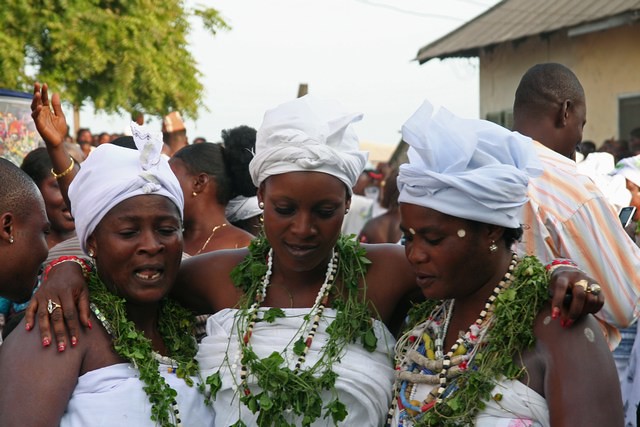
The Ga-Adangbe people, also known as Ga-Dangme/ Ga-Dangbe, represent an ethnic group found across Ghana, Togo, and Benin. Within the Ga-Dangme ethnolinguistic group, the Ga and Dangbe people constitute distinct subgroups. The Ga-Dangmes predominantly reside in Ghana’s Greater Accra region. The Ga people commonly carry surnames such as Nikoi, Amon, Kotey, Adei, Kutorkor, Oblitey, Lartey, Nortey, Aryee, Poku, and Lamptey, while Dangme surnames include Nartey, Tetteh, Kwei, Kweinor, Kwetey, Narteh, Narh, Dugbatey, Teye, Martey, Addo, Siaw, Saki, Amanor, and Djangba. This ethnolinguistic group’s historical journey traces back to the leadership of King Ayi Kushi (Cush) during the 16th century, steering them to Accra, which later became Ghana’s capital. Initially organized into six autonomous towns—Accra (Ga Mashie), Osu, La, Teshie, Nungua, and Tema—each with its stool of cultural and ritual significance, Accra emerged as a prominent Ga-Dangme town and the nation’s capital. The Ga-Dangme’s primary occupations have evolved from farming to fishing and trade in imported goods, mainly managed by women. Gender influences inheritance and property rights, with matrilineal succession for women and patrilineal descent for men. The Ga-Dangme community celebrates various annual town festivals and harbors a diverse array of gods and cults within each town. Further, the Dangme people occupy the coastal region spanning from Kpone to Ada along the Volta River and the South Atlantic Ocean. Notably, they speak Dangbe, a language closely related to Ga. The Dangme population holds substantial land in the Greater Accra, Eastern, and Volta regions of Ghana, as well as in the southern part of Togo. Their occupations revolve around fishing, trading, and farming, primarily through the Huza system—a form of capitalism established by group property ownership. Traditional crops like millet have been replaced by cassava, yams, maize, plantain, cocoa, and palm oil. Lineage members participate in annual lineage god festivals, marking their return to the traditional lineage home from Huza farms. The Ga-Dangbe people’s linguistic heritage comprises the Kwa languages—Ga and Dangme—reflecting a patrilineal kinship structure. Their cultural tapestry is interwoven with vibrant festivals like the Ga’s Homowo and Dangbe’s Asafotu, Asafotufiam, and Ngmayem, each encapsulating unique customs and traditions. Music and sports, particularly boxing, are integral to their cultural heritage. Ga-Dangbe music encompasses drumming, dancing, and traditional music styles like kpanlogo. Notable boxers hail from the fishing community of Bukom, which is revered as the boxing hub in Ghana. Rites of passage include the Dipo ceremony for the Shai and Krobo people, while funeral customs among the Ga involve the creation of fantasy coffins symbolizing the deceased’s profession or status. These coffins, intricately designed by skilled craftsmen, aim to honor the deceased by reflecting their life achievements or social standing, constituting a significant part of Ga funeral culture. Artisans like Ataa Oko and Seth Kane Kwei pioneered the creation of these symbolic coffins in the 1950s, emphasizing the Ga belief in life after death. The practice signifies respect for the departed and an attempt to sustain their earthly professions in the afterlife. This cultural phenomenon showcases an intricate blend of traditional beliefs, artistic expression, and the social significance of honoring the departed. The enduring tradition continues through the craftsmanship of contemporary coffin makers such as Cedi, Eric Adjetey Anang, Paa Joe, Daniel Mensah, and Kudjoe Affutu. Throughout the ages, the Ga-Dangbe community has preserved its rich cultural heritage, contributing significantly to Ghana’s cultural tapestry and beyond. NOTABLE GA-ADANGBE PEOPLE READ NEXT ON: The Political Structure of the Ga People

Future Trends in Corporate Communication

Corporate Communication

The future of corporate communication is in a constant state of evolution, driven by technological advancements, changing consumer behaviors, and global trends. As we move forward, several key elements are expected to shape the landscape of corporate communication in significant ways. 1. Digital Transformation The ongoing digital revolution continues to redefine corporate communication. The future will witness a more immersive digital experience, incorporating augmented reality (AR), virtual reality (VR), and interactive content. These technologies will enable companies to engage audiences in more compelling and personalized ways, breaking the barriers of traditional communication. 2. Artificial Intelligence (AI) Integration AI is poised to revolutionize corporate communication by enhancing data analytics, automating routine tasks, and enabling predictive analysis. Chatbots, powered by AI, will handle customer queries in real-time, providing instant and personalized responses. AI-driven tools will also aid in sentiment analysis, helping companies gauge public opinion and adapt communication strategies accordingly. 3. Personalization and Customization The future of corporate communication lies in personalized messaging. Brands will leverage data analytics to create highly tailored content for individual consumers, ensuring more meaningful and engaging interactions. Personalization will extend beyond just marketing emails to encompass all forms of communication, from social media engagements to customer support interactions. 4. Virtual Collaboration and Remote Work The shift to remote work, accelerated by the global pandemic, has transformed the way companies communicate internally and externally. As remote work becomes more common, virtual collaboration tools and platforms will continue to evolve, offering seamless communication experiences irrespective of geographical boundaries. Video conferencing, project management tools, and virtual workspaces will be further optimized to enhance productivity and connectivity among remote teams. 5. Ethical and Transparent Communication In an era marked by heightened social consciousness, corporate communication will prioritize transparency, authenticity, and ethical practices. Companies will need to communicate their values, social responsibility initiatives, and sustainability efforts transparently to build trust and credibility among stakeholders. 6. Integration of Multiple Communication Channels The future will witness a convergence of various communication channels, seamlessly integrated to deliver a unified brand experience. Integrated communication platforms will consolidate messaging across multiple touchpoints, ensuring consistency and coherence in brand communication. 7. Focus on Employee Communication Engaging and retaining talent will be a priority for organizations. Effective internal communication strategies will foster a sense of belonging, align employees with organizational goals, and enhance productivity. Platforms facilitating two-way communication and employee feedback will be crucial. 8. Regulatory Compliance and Data Security As digital communication grows, ensuring compliance with data protection laws and maintaining data security will be paramount. Companies will invest in robust cybersecurity measures and adhere to stringent data protection regulations to safeguard sensitive information. In conclusion, the future of corporate communication is poised to be more dynamic, technologically advanced, and human-centric. Embracing innovation, adapting to changing consumer preferences, and prioritizing transparent and ethical communication practices will be critical for businesses to thrive in the evolving landscape of corporate communication. WHAT’S OUT THERE: What To Expect In The Future Of Corporate Communications READ NEXT ON: Perfecting Business Phone Etiquette: 10 Tips and Why They Matter

Understanding Brand Dilution and Impact of Over-Expansion

Brand Dilution

Brand dilution is a significant concern for businesses, particularly those aiming for rapid growth and expansion. It occurs when a brand extends itself too far, venturing into unrelated markets, introducing too many products, or losing focus on its core identity. This can lead to a loss of brand clarity, diminishing brand equity, and ultimately, a weakened brand impact. 1. Straying from Core Values One common cause of brand dilution is when a company starts diversifying excessively, deviating from its core values and mission. For instance, a brand known for superior quality in a specific niche may dilute its reputation if it begins offering lower-quality products or services to broaden its market. 2. Over-Extension into Unrelated Markets Expanding into new markets might seem promising, but if these markets are vastly different from the brand’s core offering, it can dilute brand identity. An electronics brand trying to sell gourmet food items may confuse consumers and dilute its brand perception. 3. Overcrowding Product Lines When brands introduce an excessive number of products or variations, it can lead to confusion among consumers. Too many choices may overwhelm customers, affecting their perception of the brand’s value and uniqueness. 4. Neglecting Target Audience Failing to understand and cater to the needs of the target audience can lead to brand dilution. Brands must consistently connect with their audience and ensure that new offerings align with customer expectations. 5. Quality Over Quantity Prioritizing quantity over quality in expansion strategies can dilute brand value. For instance, rapid franchise expansions without ensuring consistent service quality can harm a brand’s reputation. 6. Inconsistent Brand Messaging A strong brand relies on a consistent and coherent message. When companies diversify or expand without maintaining a unified brand narrative, it leads to brand dilution. 7. Maintaining Focus Staying focused on the brand’s core competencies and strengths is crucial. Brands should expand while ensuring that their new endeavors align with their overall brand identity and values. Preventing brand dilution involves strategic planning and mindful decision-making. It’s vital for businesses to thoroughly analyze the implications of expansion and diversification strategies before execution. Successful brands like Apple and Nike have expanded strategically, maintaining their brand essence and values. They carefully plan their product extensions and market entries, ensuring alignment with their core offerings. In conclusion, brand dilution can significantly impact a company’s reputation, consumer perception, and overall success. Businesses must strike a balance between growth and maintaining brand integrity to avoid diluting their brand. Strategic planning, consistent messaging, and a clear understanding of the target audience are key to preventing brand dilution and ensuring sustained success in the market. WHAT’S OUT THERE: What is brand dilution and how to avoid it READ NEXT ON: 7 Ways to Revamp Your Image After a Branding Misstep LATEST POSTS:

Bunso Eco Park (Bunso Arboretum)

Bunso Eco Park

Bunso Eco Park, nestled in the Abuakwa South Municipality of the Eastern region of Ghana, is a prime destination for eco-tourism enthusiasts, adventure seekers, and those seeking a tranquil retreat. Boasting over 600 species of trees, with numerous applications in traditional medicine, Bunso offers a unique blend of semi-deciduous native forest and specially introduced species, cultivated by the Plant Genetic Resources Centre of Bunso for research purposes. Visitors can immerse themselves in the diverse natural surroundings, which host more than 110 species of birds, 30 species of butterflies, and a rich herb garden featuring over 40 varieties. Guided tours of the arboretum provide insights into both indigenous and exotic plants, delving into their medicinal properties and traditional healing applications. For a taste of local life, a village tour offers a firsthand look at cocoa farming and village traditions. Activities at Bunso Eco Park include 2. Children’s Playground/Walkway: Tailored for young adventurers, this child-friendly park features a purpose-built canopy walkway, ensuring that children partake in the excitement. 3. Butterfly/Bird Sanctuary: A leisurely stroll through the forest unveils an array of butterflies and occasional bird species. The best time for butterfly sightings is typically before 8 am. 4. Horse-Riding: A recent addition to the park, two horses provide visitors with the opportunity to explore the park on horseback. 5. Zipline Adventure: Pump up the adrenaline with a thrilling ride down the newly constructed 50-meter zipline. What sets this zipline apart is its entry and exit via a suspended ropes walkway. To reach Bunso Eco Park, head to Bunso in the Eastern Region, merely 4.1 kilometers from Bunso junction (Linda Dor) on the Accra-Kumasi Road. History The 40-acre forest reserve that hosts the Aboretum which belongs to the Akyem Abuakwa Traditional Council who leased it to a mining firm in the early twentieth century for surface mining but later given to another company known as African Products Department for rubber and cocoa plantations in 1917. After the company left, two British bought the park on which they built a guest house in 1935. The guesthouse is currently serving as the official residence for the Vice Chancellor of the University College of Agriculture and Environmental Studies; an institution established by the Okyehene, Amoatia Ofori Opanin II. In 1946, the facility was then acquired by the Plant Genetic Resource and Research Institute of the Council for Scientific and Industrial Research (CSIR) which has been managing it ever since. The forest reserve has some of the rare tree species including Garcinia Kola, known locally as Twepea, reputed for its health benefits. Garcinia kola is said to be used in many tropical countries to fight infectious diseases and also known to possess anti-inflammatory, antimicrobial and antiviral properties. Other tropical tree species found at the centre include Okure, mostly used for dugout canoes as well as the Alpha and Omega trees used for the local sponge (sapowie). READ NEXT ON: Adom Waterfalls

The Political Structure of the Ga People

Political Structure

The Ga people’s political structure is organized into six independent sub-states, known as the traditional areas of Gamashie, Osu, La, Teshie, Nungua, and Tema. Each of these areas encompasses various villages in their hinterland, sharing names with their corresponding capital towns. The Mantsemei, or Kings, of these capital towns hold equal and independent status. Clans within villages and towns are distinguished by names, member names, and specific religious affiliations and rituals. In each village or town, there is a Mantse or chief under the Mantse of the corresponding traditional area, who is in turn the Mantse of the capital town. Clans, representing patrilineal or matrilineal relations, are further divided into families, and families are subdivided into ‘houses,’ consisting of individuals with a common and closest ancestral origin. A person may belong to two traditional areas, two clans, two families, and two houses concurrently, one by way of their father and the other through their mother. Each house and family is overseen by a wise elder, typically the oldest capable member. Female elders lead female members, while male elders head the male members, and additionally, oversee the houses and families as a whole. When an elder becomes frail due to age, a consensus appoints another to act as head, a practice known as “shuonotamo” (sitting on the lap of the elderly and wise). The selection of the clan head is based on merit, rather than age. When the need arises for a new clan head, the heads of the various houses and families within that clan assemble to compile a list of eligible candidates chosen by merit, based on lifelong observations. This list is presented to an electoral college, including the heads of various clans, professional groups like the head of farming (Okwaafoiatse), and the head of fishing (Woleiatse), as well as the chief priest (Wulomo) and clan captains (asafoiatsemei and asafoianyemei). This same council aids the Mantse in governing the town or village. The clan head is selected by consensus from the list in secrecy to prevent competition and petty rivalries. The chosen clan head is then ceremonially presented to the people of the town or village, where he swears an oath of allegiance to the ruling college and the Mantse. The selection process for a Mantse closely resembles that of the clan head. The royal clan, comprised of several houses, takes turns providing Mantsemei. When the responsibility falls on a specific royal house, it is their duty to present a list of candidates chosen by merit to the clan head, who then forwards the names to the electoral college. The Mantse is selected by consensus, and a date is set for the ceremonial presentation, where he swears an oath of allegiance to the electoral college and they, in turn, pledge allegiance to him individually. Just as clans united to form towns, villages, and traditional areas for a more secure civilized life, the independent traditional areas came together to constitute the Ga State. The Gamashie Mantse was chosen as the first among equals to preside over the meetings of the Ga State Council, which consists of the Mantsemei of the capital towns of the traditional areas. The Nai wulomo serves as the speaker of the Ga State Council. READ NEXT ON: Background & History of Kpanlogo

Perfecting Business Phone Etiquette: 10 Tips and Why They Matter

Business Phone Etiquette

In the today’s world of business, effective phone communication is an invaluable skill. It’s not just about what you say, but how you say it. Mastering business phone etiquette can leave a lasting impression on clients, colleagues, and partners. In this article, we’ll explore ten essential tips to help you perfect your phone manners and enhance your professional image, along with the reasons why each tip matters. 1. Answer Promptly and Professionally Responding promptly to incoming calls shows respect for the caller’s time and needs. It also conveys your readiness and commitment to addressing their concerns efficiently. 2. Mind Your Tone and Pitch A well-modulated voice exudes confidence and professionalism, assuring the caller that they are communicating with a capable and attentive professional. 3. Active Listening is Key Active listening demonstrates genuine interest in the caller’s concerns, building trust and rapport. It also ensures that you fully understand their needs, enabling you to provide the best possible assistance. 4. Identify Yourself Clearly Clear identification ensures that the caller knows who they are speaking with, fostering transparency and trust in the business relationship. 5. Respect Privacy and Confidentiality Respecting privacy shows your commitment to ethical communication, instilling confidence in the caller that sensitive information is handled with care and professionalism. 6. Use Professional Language Professional language maintains the integrity of your brand and ensures that communication is clear and effective, avoiding misunderstandings or misinterpretations. 7. Stay Calm and Composed Maintaining composure under pressure demonstrates your ability to handle challenging situations, instilling confidence in the caller that their concerns will be addressed effectively. 8. Offer Clear Next Steps Providing clear next steps demonstrates your commitment to follow through and ensures that both parties are aligned on the action items moving forward. 9. Mind Your Speed and Volume Adjusting your speaking pace and volume to match the caller’s needs ensures effective communication, avoiding frustration or miscommunication. 10. End the Call Gracefully A graceful conclusion leaves a positive impression, reinforcing your commitment to providing excellent service and assistance. Mastering business phone etiquette is an essential skill that can set you apart in the professional world. By following these ten tips, you’ll not only enhance your communication skills but also leave a lasting positive impression on your callers. Remember, effective phone etiquette is a reflection of your professionalism and respect for others in the business world. Each tip plays a crucial role in creating successful and productive phone interactions, ultimately contributing to the success of your business. WHAT’S OUT THERE: 16 Phone Etiquette Tips To Help Employees Be More Professional on Calls READ NEXT ON: 7 Ways of Balancing Professionalism with Playfulness