History of Saltpond Girls’ Secondary School now Mfantsiman Girls’ Secondary School

Mfantsiman Girls’ Secondary School was formerly known as Saltpond Girls’ Secondary School. The name was changed to Mfantsiman when the District of Saltpond became the District of Mfantsiman. The school was founded by the late Osagyefo Dr. Kwame Nkrumah, President of the First Republic of Ghana as a special gesture of appreciation to the people of Saltpond for the part the town played in the political history of the country. He aimed to empower girls in the area and in addition establish a Polytechnic for girls. A group of prominent persons was selected to choose the site for the School. These persons included Mr. Kojo Botsio, then Minister of Education, Mr. Kofi Baako, then Member of Parliament of Saltpond, Mr. George Padmore, West Indian Pan-Africanist, Dr. Hastins Banda, then President of the Republic of Malawi, and Mr. S.E. Arthur, then Member of the School Board of Governors. The area where the school is established used to be called Kuntupow. Constructional work of the school thus began in 1958 on a land size measuring 430.10 acres. Part of the first phase consisted of the Administration Block, Classroom Block, Science Block, Dining Hall, one teacher’s bungalow, and the headmistress’s bungalow were completed in September 1960. On 23 September 1960, students were selected through the late Entrance Examination and interviews, and on 30 September 1960, the school was made one of the Ghana Education Trust (GET) schools and opened its gates to its first students comprising of a batch of seventy (70) and four (4) teachers including the Headmistress. The first two dormitory blocks Chinery and Butler Houses (named respectively after the Headmistress and the Assistant Headmistress at the time ) were completed in 1961. Students moved from their temporary top Classroom Block dormitories to occupy these new dormitories. There were 140 students at the time. The school year after year has built more infrastructure to take in more girls. Mfantsiman School has turned out over 10,000 students (including 18 boys) with School Certificates/General Certificates of Education Ordinary Level, Advanced Level Certificates, and Senior Secondary School Certificates since its inception. Location of Mfantsiman School Notable Alumni of Mfantsiman School Politics, government, and public policy Law Journalism Arts and Entertainment Banking Education Business READ NEXT ON: History of Mfantsipim School
Justice Georgina Theodora Wood, First Female Chief Justice of Ghana

Justice Georgina Theodora Wood (born 8 June 1947) is a Ghanaian judge and also a former police prosecution officer. She was the first female Chief Justice of Ghana. She retired in 2017 after five decades of service to the state. Her Early Life Justice Georgina Theodora Wood had her basic education at Bishop’s Girls and Methodist Schools, Dodowa. She next attended Mmofraturo Girls School, Kumasi between 1958 and 1960. Wood’s secondary education was at Wesley Girls’ High School, Cape Coast, which she completed in 1966. She proceeded to the University of Ghana, Legon, where she was awarded the LL.B. in 1970 and furthered to the Ghana School of Law after which she was called to the bar. She also did a Post-Graduate Officers Training Course at the Ghana Police College. Her Career Wood spent three years with the Ghana Police Service as a deputy superintendent and public prosecutor. She later became a District Magistrate in the Judicial Service in 1974. She advanced through the Circuit and High Courts to become the Appeal Court’s presiding judge in 1991. On November 12, 2002, she was appointed to the Supreme Court by President John Kufuor, an appointment she had previously declined. In May 2007, she was nominated for the position of Chief Justice of Ghana. On June 1, 2007, the Ghanaian Parliament unanimously approved her nomination as the country’s new Chief Justice. As of June 2007, she was the first woman in Ghana’s history to head the Judiciary, as well as the highest-ranking female in Ghana’s political history; that rank was surpassed in January 2009 by the appointment of Justice Joyce Adeline Bamford-Addo as Speaker of Ghana’s 4th Republic’s 5th Parliament. Chief Justice Wood took office on June 15, 2007. During her tenure, she swore in four presidents: President John Evans Atta-Mills in January 2009, Vice-President John Dramani Mahama following the death of Atta-Mills on 24 July 2012, President-Elect John Dramani Mahama, winner of the December 2012 General Elections on 7 January 2013, Nana Akuffo-Addo, winner of the December 2016 elections on 7 January 2017. In June 2017, she announced her retirement as Chief Justice. Justice Sophia Akuffo succeeded her. On the 7th of July 2007, Wood was decorated with the highest honor of the nation, the Order of the Star of Ghana. This prestigious award recognizes individuals who have made significant contributions to the advancement of Ghana’s society and culture, and Wood’s achievement was well-deserved. The award was presented to her by President John Kufuor, who was in office at the time. President Kufuor himself is a recipient of the award, having been honored with it in 2001. This made the presentation of the award to Wood even more significant, as it was a recognition of her tireless efforts and contributions to the nation. The Order of the Star of Ghana is an exclusive award, and only a select few have been honored with it. It is given to individuals who have demonstrated a strong commitment to the development of Ghana in various fields such as politics, education, arts, and culture. Wood’s recognition of this award was a testament to her outstanding work and contributions to the betterment of Ghana. Other roles Wood is the Chairperson of the Alternative Dispute Resolution in Ghana. She has also served as a member of the Kenya Judges and Magistrates Vetting Board. She serves on the board of the Global Justice Center, an international human rights law organization based in New York City. READ NEXT ON: Ghanaian Women breaking the bias- Prof. Elsie Effah Kaufmann
History of Mfantsipim School

The idea of establishing a collegiate school to raise educational standards on the Gold Coast was first proposed in 1865, but it was not realized until 1876 when the Wesleyan High School in Cape Coast was founded with donations from local businessmen and the support of the Methodist Missionary Society in London. The school was founded to train teachers and began with 17 students. It was originally planned to be located in Accra because the British Government had decided to relocate the Gold Coast’s capital from Cape Coast to Accra by 1870. However, local agitation and the pressing need to put the idea into action after eleven years of debate compelled the government to allow the school to open, but with the understanding that it would later be relocated to Accra, which never happened. Mfantsipim’s original name was Wesleyan High School, and it was founded on April 3, 1876. In 1905, a graduate of the school, John Mensah Sarbah, established a rival school called Mfantsipim; the name is derived from “Mfantsefo-apem,” which literally means “thousands of Fantes” but actually means “the gathering of hosts of scholars for change” as originally conceived by the Fantes. In July of that year, the two schools merged under the supervision of the Methodist Church, and the name Mfantsipim was retained. The school’s founder, John Mensah-Sarbah, stated at its inception that its goal was “to train up God-fearing, respectable, and intelligent lads.” The school was classified as a grammar school because Latin and Greek were taught there in the beginning, though other disciplines such as carpentry, art, and crafts were also available. It is a boarding school for boys only, with seven dormitories or houses. In 1907, Reverend W. T. Balmer arrived in Mfantsipim on a mission to inspect the state of colleges and collegiates throughout West Africa. When he arrived in Mfantsipim, he felt compelled to stay for some reason. To his surprise, he only met eight boys in the entire school, and there was no teacher or headmaster, as the previous headmaster had left for the United Kingdom. They were dubbed the “Faithful Eight” by Balmer. Kobina Sekyi, one of those boys, went on to become a well-known lawyer, statesman, and writer. To honor them, a monument has been erected between the Administration Block and the Assembly Hall. Reverend R. A. Lockhart arrived in 1925 and laid the groundwork for the school’s growth. He constructed classrooms and dormitories on Kwabotwe Hill before relocating the school to its current location in 1931. He was also a driving force behind the introduction of the Cambridge School Leaving Certificate Examination to the Gold Coast (now Ghana). Lockhart was a strong-willed, principled Irishman who was critical of Gordon Guggisberg’s administration and Gold Coast secondary education ideas. Guggisberg proposed reducing the school to a basic institution, but Lockhart persuaded locals to enroll more of their children. Lockhart’s administration oversaw the construction of the majority of the school’s buildings and structures. On their graduation, he encouraged some of the school’s brightest students to become teachers. For example, he mentored F. L. Bartels in this direction, and as a result of his efforts, Mfantsipim received its first black headmaster. Dr. Francis Lodwic Bartels, the school’s first black headmaster and a product of the school, took office in 1949. From 1942 to 1945, he was acting headmaster, then became main headmaster and served for another 11 years, retiring in 1961. Dr. Bartels was notable for his close relationship with the boys, encouraging them to face the world, but only with discipline. Former UN Secretary-General Kofi Annan, who attended the school, recalled, “I was one of a group of boys who sat on the floor of his office for our weekly lesson in spoken English.” Many influential school graduates have served not only their country and continent of Africa but also continents outside of Africa and numerous international organizations. Many alumni of Mfantsipim School have gone on to careers in medicine, science, engineering, education, architecture, and a variety of other fields. The school relocated to its current location on Kwabotwe Hill in the northern part of Cape Coast on the Kotokuraba road in 1931. Because of its location on that hill, the school has been referred to as Kwabotwe or simply Botwe. Notable Alumni of Mfantsipim School Alumni of the school include Kofi Annan, 2001 Nobel Peace Prize laureate and former Secretary-General of the United NationsKofi Abrefa Busia, former Prime Minister of GhanaKobina Sekyi, lawyer, writer, nationalist J. E. Casely Hayford, journalist, and politician Alex Quaison-Sackey, diplomat, and first black president of the UN General AssemblyJoseph W.S. de Graft-Johnson, former Vice President of GhanaKow Nkensen Arkaah, former Vice President of the Republic of GhanaPaa Kwesi Amissah-Arthur, former Vice President of GhanaMohamed Ibn Chambas, former president of ECOWAS CommissionKobina Arku Korsah, first Chief Justice of Ghana READ NXT ON: History of Holy Child School
Asogli Yam Festival

Asogli Yam Festival is an annual festival held by the people of Asogli in the Ho Municipality of Ghana’s Volta Region. It is celebrated annually in September to commemorate the cultivation of yam, which was started by a hunter who discovered the tuber in the forest during a hunting expedition. According to legend, yam cultivation began among the Asogli people when the yam that the hunter hid during his hunting expedition germinated and grew larger. The Ewe people of Ghana brought the celebration with them when they migrated from Notse in the Republic of Togo, where it is still celebrated. Togbe Aede XIV reintroduced the Yam Festival, which had been dormant for over a decade, in 2004. The Yam Festival, which aims to educate and entertain both Ghanaians and visitors about Asogli traditions, provides an opportunity to experience traditional music, dance, storytelling, and a grand durbar to conclude the festival. Togbe Aede XIV has led the way in uniting many chiefs throughout the Volta Region, as well as other parts of Ghana and Togo. As a result, the Yam Festival draws a large number of these chiefs. On May 8, 2018, the Asorgli state announced at a press conference in Ho that the festival’s name would be changed to Te Za (Yam Festival) to reflect the people’s history and culture. Original of the Asogli Yam Festival The Ewes brought the Yam Festival down from Notse in the Republic of Togo, where it is still celebrated. Yam cultivation is a laborious task, and legend has it that some of those who attempted it did not live to see the fruits of their labor. It was and still is labor-intensive, energy-consuming, and dangerous, as the proverb “Ne wonye eteti tsogbe wo dua ete la, ne egbor ma kpor etsroa ha du o” attests. This literally means that if yam is eaten on the day of planting, the goat will never taste the peel. Diligence was thus required, and the permission and guidance of the gods of the land and the ancestors were sought throughout the entire planting to harvesting period. Before any living being tasted the boiled and mashed yam, normally white and red-oiled, called “bakabake” during harvest time, which is usually in September. “Dzawuwu” is the name given to this rite. The remainder of the mashed yam is then consumed as a communal meal, a symbol of family, clan, and community unity and reconciliation. Tap >> here<< to learn more about the festival. READ NEXT ON : Homowo Festival
The Komfo Anokye Sword Site

The Okomfo Anokye Teaching Hospital, a renowned medical facility in the Ashanti region of Ghana, is not just any hospital. It has a unique and fascinating history that dates back over 300 years. The hospital is situated on the site where Okomfo Anokye, a powerful Asante priest, planted an unmovable sword into the ground, and the sword remains there to this day. Legend has it that Okomfo Anokye, also known as Anokye Supremo, used his supernatural powers to thrust the sword into the ground. He prophesied that no one would be able to remove it and that it would serve as a symbol of the Asante nation’s unification and strength. The sword, which was planted almost 300 years ago, has withstood the test of time and remained firmly stuck in the ground, despite numerous attempts to remove it. One of the most fascinating aspects of the story is that several people have tried to pull out the sword over the years, but all have failed. Even the legendary boxer Muhammad Ali attempted to remove it when he visited Ghana in 1964, but the sword refused to budge. It is said that if anyone ever succeeds in pulling out the sword, the Ashanti state would collapse, which adds to the mystery and intrigue of the story. The Okomfo Anokye Sword site is now considered one of the wonders of the world and one of the centerpieces of the Asante nation’s rich history. It is located on the grounds of the Komfo Anokye Teaching Hospital, which is named after the famous priest. The hospital itself is a state-of-the-art facility that provides high-quality healthcare services to patients from all over Ghana and beyond. About Okomfo Anokye Okomfo Anokye was a prominent figure in the history of the Ashanti Empire, where he served as the first priest (Okomfo). He played a significant role in expanding the empire’s boundaries and codifying its constitution and laws. Anokye’s birth is said to have taken place in Ghana, around the year 1655. According to Akuapem tradition, his parents were Ano and Yaa Anubea, both from Awukugua in the Nifa Division of the Okere state. Origin of his name Anokye’s name originated from an interesting incident that happened during his birth. It is said that he was born holding a short white tail of a cow (Podua) in his right hand, and his other hand was so firmly clenched that no one could open it. A woman who attended his mother’s labor tried to open his hand, suspecting that there was something inside. Anokye’s father was called to assist, and as soon as he arrived, Anokye opened his eyes, stared at his father, quickly opened his clenched hand, and said, “Ano….Kye” in the Guan language, which means “Ano…see,” and handed his father what was inside. It was alleged to be a talisman, and from that incident, Kwame Anokye Frimpon Kotobre got his name “Anokye.” Unification of the Ashanti people To break free from the Denkyira yoke, a powerful unity that transcended the particularism of the Ashanti segments was required, and Anokye used not only the political influence of his priesthood but also the spiritual ties it fostered to transform the loose Ashanti alliance into a “national” union in 1695. Anokye and Tutu established Ashanti state rituals and customs to counteract the influence of local traditions. They chose Kumasi as the Ashanti capital. They then established a state council of the chiefs of the previously admitted states to the union and suppressed all competing origin traditions. Finally, the Ashanti army was reorganized. War with the Denkyira The war with Denkyira (1699-1701) started badly, but when the Denkyira army arrived at Kumasi’s gates, Anokye’s incantations allegedly caused defections among their generals. The Denkyira hegemony was broken when the Ashanti captured the Dutch deed of rent for Elmina Castle. This gave the empire’s traders access to the African coast and immersed them in the commerce and politics of the coastal slave trade. His Death Following the death of Osei Tutu in 1717, Anokye is said to have returned to Akuapim and died between 1717 and 1719 in the Kumase town of Kyirapatre (aged between 62 and 64). The true cause of his death is unknown, but it is said that he was about to bring the key to death, so no one should cry; if anyone is heard crying, he will never return. After a few days, he was still missing, and the women cried, and he never returned. READ NEXT ON: New Canopy Walkway at Amedzofe in the Volta Region
History of Holy Child School

Following the establishment of Mfantsipim School (Methodist) and Adisadel College (Anglican) in 1876 and 1910 respectively, the Catholic community in Ghana was eager for the establishment of Roman Catholic-based education in Ghana. On 15 January 1935, Bishop Porter blessed and led a ceremony for the laying of the foundation stone of St. Augustine’s College, which was solemnly laid by Sir Arnold W. Hodson, the then Governor. His Lordship then turned his attention to female education. “As far as possible”, said Bishop Porter, every Catholic was to be educated in a Catholic School or College. The reason is very obvious. The ordinary man or woman imbibes his or her Catholicism from practice rather than theory. Catholicism in school and college is thus too necessary for the Catholic boy or girl. Their conversations at the table and during recreations, their games and work, and the expression of their ideals themselves, in a word, their whole body, mind, and soul must be thoroughly Catholic. And can the Catholic atmosphere, that almost indefinable atmosphere be found anywhere else besides the Catholic School and College?” Therefore, to meet the increasing demands for wider educational facilities for girls, a reorganization of existing establishments and the provision of new schools became an urgent necessity. Many female teachers were needed to help teach in schools. The shortage of teachers was acute. As far back as 1934 Bishop Porter of the Gold Coast Colony Vicariate had appealed to Rev. Mother General to open a Secondary School for girls in his Vicariate, but it was not until World War II between 1939 and 1945 that the foundation was seriously discussed and accepted. On 12 August 1945, the foundation stone of Holy Child (the combined Catholic Teacher-Training College and Secondary School for girls) was solemnly blessed by His Lordship Bishop William Porter and laid by the Honourable T. R. O. Mangin, the Chief Commissioner of the Colony. The Commissioner was very happy that one of the post-war projects was to be the provision of education for girls. The first party of three nuns, Rev. Mother Mary Joachim, Mother Mary Cyril (assistant), and Mother Mary St. Edward landed at Takoradi on 20 February 1946. They were met at the wharf, first by the Rev. Father Fisher, Vicar Delegate of Bishop Porter, who was to prove himself to be a faithful friend and an invaluable counselor during the early days of the college and secondly, to their great joy and surprise, by Rev. Mother General and Rev. Mother Provincial. By 5 March 1946, the lower school building, the convent, three dormitory blocks, two dining rooms, a water tower, and two bungalows had been put up, the college admitted 120 students. His Lordship William Porter continued to encourage parents to send their daughters to Holy Child College. Consequently, by 1955 the number of students has doubled and it became necessary to transfer the Training College Department to Takoradi. Holy Child School, which started with 50 students, now had 700 students and Holy Child College now had 400. The school offered academic as well as vocational courses. Before 1955, students did their sixth-form course at St. Augustine’s College until the school secured teachers to handle sixth-form subjects Holy Child College and School has produced and continues to produce highly qualified professional women who have served their country with great satisfaction and efficiency in accordance with the motto of the school “Facta Non Verba” (Actions Not Words). There are two distinctive features in the educational system of society. First, the students were given some measure of freedom and trust – rather unusual in those days. One of the nuns wrote: “under such training the law of conscience becomes paramount, and a permanent basis of principle is developed which is not likely to be discarded later with the school uniform.” Notable Alumni of Holy Child School READ NEXT ON: History of Prempeh College
New Canopy Walkway at Amedzofe in the Volta Region

Amedzofe is a picturesque settlement located north of Ho in the mountainous region of the Ho Municipal District of the Volta Region of Ghana. This region has recently seen a surge in tourism, and the latest addition to its attractions is the Amedzofe Canopy Walkway. The Amedzofe Canopy Walkway is similar to the popular Kakum National Park in design and structure. It is built near the Ote Waterfalls and was constructed by Herp Conservation Ghana, an environmental protection non-governmental organization. The Onepone Endangered Species Refuge is where the Amedzofe Canopy Walkway is located, and it was originally intended to protect endangered frogs. However, the reserve now protects at least 11 other IUCN-threatened species, including the critically endangered Hooded Vulture, white-bellied pangolin, Ukami reed frog, Angel’s trumpet, and several undescribed butterfly species. The canopy walkway project aims to protect the environment and conserve both newly discovered and endangered animal species. Additionally, it generates revenue through ecotourism to provide alternative livelihoods to the farmers and hunters who are the primary landowners and residents. Tourists who visit the Volta Region and want to experience nature’s beauty now have a new attraction to explore. The distance between Ho and the Amedzofe Pass is approximately 37 km by road, and the newly opened Ho Airport is expected to facilitate tourism in the area. With its focus on environmental conservation, protection of endangered species, and ecotourism, the Amedzofe Canopy Walkway offers a unique experience that showcases the beauty and diversity of nature in the Volta Region. READ NEXT ON: Shai Hills Resource Reserve
Shai Hills Resource Reserve

The Shai Hills Resource Reserve is a protected area located in Doryumu in the Shai Osudoku District, within the Greater Accra Region of Ghana. The reserve was established in 1962, initially covering an area of 47 square kilometers. In 1973, the reserve’s area was expanded to 51 square kilometers. Before it became a protected area, the Shai people lived in the region, but they were ejected by the British in 1892. Today, the remains of their works can still be found in the reserve. The Shai Hills Resource Reserve is home to almost 400 plant species, spread across five separate hills. The reserve is covered in a mosaic of forest vegetation, while grassland and low dry forests can be found in intervening canyons. The reserve is also home to dozens of animal species, including antelopes, bats, birds, baboons, cats, duikers, guinea fowl, green monkeys, monitor lizards, African pythons, royal pythons, and zebras. The reserve has become a popular destination for visitors who want to experience the natural beauty of Ghana. Recreational activities, such as picnics, game viewing, bird watching, nature walking, and rock climbing, are some of the activities that visitors can enjoy at the reserve. In 2017, the reserve hosted the National Biking & Abseil Festival. Wildlife viewing is one of the most popular activities at the Shai Hills Resource Reserve. Visitors are advised to visit early in the morning for the best sightings of animals such as kob antelope, bushbuck, or monkeys. However, visitors should be careful around the baboon troop at the front gate, as they can be dangerous and may snatch unattended personal belongings. Visitors can visit the reserve throughout the year, although travel within the reserve can be challenging during the rainy season. The early rainy season, from May through July, is especially difficult due to the rough road conditions. Nevertheless, the reserve remains an attractive destination for visitors who want to experience the beauty of Ghana’s natural environment. For more insight about the reserve, visit the Shai Hills page on Instagram. READ NEXT ON: The highest waterfall in West Africa; Wli Waterfalls
Meet singer Wiyaala who is also fighting early child marriage in the Northern zone of Ghana.
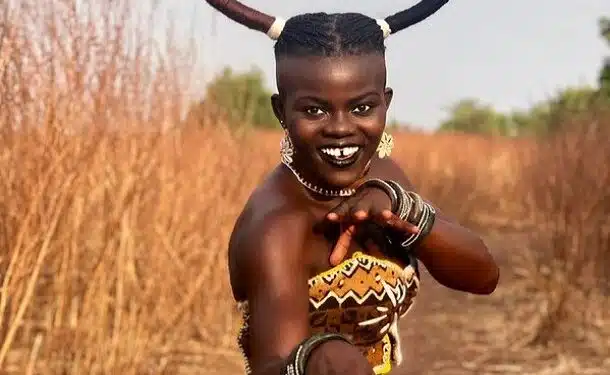
Noella Wiyaala, also known as Wiyaala, is a Ghanaian Afro-pop singer-songwriter who sings in her native language Sissala and Waala dialects, and English, often combining all three languages within her songs. Wiyaala, which means “the doer” in the Sissala dialect, has attained public renown with her single “Make Me Dance” and her androgynous image. After making her name in reality shows in Accra, Wiyaala established a solo career in 2013 with the hit single “Rock My Body”, which won her two awards at the 2014 first edition of the All Africa Music Awards, the Most Promising Artiste in Africa and Revelation of The African Continent. Wiyaala is also associated with UNICEF Ghana and the Ministry of Gender, Children and Social Protection of Ghana in campaigns against child marriage, child poverty, health and sanitation. She headlined the 15th London African Music Festival in London. In March 2021, she was among the Top 30 Most Influential Women in Music by the 3Music Awards Women’s Brunch. Wiyaala’s music references West African Folk traditions and contemporary Afro-Pop, sometimes evoking comparisons with African divas Mariam Makeeba, Brenda Fassie, and Angelique Kidjo. The second of four sisters and thanks to her musical mother, Wiyaala was spared the horrors of FGM and child marriage whilst attracting attention as a child entertainer, dancer, artist, and footballer despite growing up in a patriarchal society often hostile to artistic growth Wiyaala has used her platform to give back to her community in Funsi, Ghana. She has built an Arts Centre, Guest House, and Restaurant where she frequently holds festivals and events to encourage the local children to develop their creativity and sense of self-worth. Through her work with the Ministry of Gender, Children and Social Protection of Ghana and UNICEF, she has partnered on several projects to help protect the rights of children and address public health issues. Wiyaala is also an advocate for women’s rights and is outspoken on the male-dominated culture and polygyny of some African countries. She has used her music to raise awareness about issues such as early child marriage and the exploitation of women in Africa. Her song “Tinambayai” in the Sisaala language has been regarded as a protest against the exploitation of women in Africa. Wiyaala has been featured on BBC talking about early child marriage and has expressed sympathy for feminism as a means to encourage young girls into completing their education so that they can be the ones that make the choices in their lives. She has declared that her success would serve as an example to her community that there was a future for young women beyond an early forced marriage. Wiyaala’s unique blend of West African folk traditions and contemporary Afro-pop has earned her comparisons to African divas Mariam Makeeba, Brenda Fassie, and Angelique Kidjo. She has released two albums, “Wiyaala” in 2014 and “Sissala Goddess” in 2018, with a third album titled “Yaga Yaga” due to be released in 2022. In 2014, Wiyaala became the first Ghanaian artist to chart on Billboard since Osibisa in the 1970s with her 2014 FIFA World Cup Song “Go Go Black Stars”. Wiyaala’s music and talent have earned her recognition and accolades both nationally and internationally. In 2014, she won the Vodafone Icons Reality Show in Accra, which launched her career as a solo artist. She has since represented Ghana and Africa at prestigious events, media, and festivals all over the world, including the Commonwealth Games 2018 in Australia, The African Union in Addis Ababa, WOMAD UK, Green Man, Kendal Calling, Shambala, and the Timitar Festival in Morocco. In March 2021, she was among the Top 30 Most Influential Women in Music by the 3Music Awards Women’s Brunch. Wiyaala’s success as an independent musician, entertainer, and activist is a testament to her resilience and commitment to using her talent and platform for good. She continues to inspire young girls and women in Ghana and beyond to pursue their dreams and fight for their rights. READ NEXT ON : Ghanaian Women breaking the bias- Prof. Elsie Effah Kaufmann
Ghanaian Women breaking the bias- Prof. Elsie Effah Kaufmann

Prof. Elsie Effah Kaufmann, born on 7 September 1969, is a well-known academic and biomedical engineer in Ghana. She hails from Assin in the Central Region of Ghana and is the daughter of educators. She attended Aburi Girls’ Senior High School for her secondary education and obtained her International Baccalaureate Diploma from the United World College of the Atlantic in Wales in 1988. Prof. Effah Kaufmann holds a Bachelor of Science in Engineering (BSE), a Master of Science in Engineering (MSE), and a Ph.D. in Bioengineering, all from the University of Pennsylvania, USA. After completing her graduate studies, she received her postdoctoral training at Rutgers University before returning to Ghana to join the University of Ghana in 2001. At the University of Ghana, Prof. Effah Kaufmann played a key role in the establishment of the Faculty of Engineering Sciences. She was a member of the Planning Committee set up by the Academic Board of the university to propose the establishment of the faculty and was also a member of the three-person Implementation Committee set up by the Vice Chancellor following the submission and adoption of the Planning Committee’s report. In 2006, she was appointed as the first Head of the Department of Biomedical Engineering, where she served for several years. Prof. Effah Kaufmann is a dedicated teacher and researcher, focusing on Tissue Engineering, Biomaterials, and the application of Biomedical Engineering concepts to solving problems in the Ghanaian context. Her work has earned her recognition both in Ghana and abroad, including the University of Ghana’s Best Teacher Award for the Sciences in 2009, the International Women’s Forum Leadership Foundation Fellowship in 2011, and the National Society of Black Engineers’ 2018 Golden Torch Award for International Academic Leadership. Prof. Effah Kaufmann is a passionate advocate for science education at all levels. She has been the host and quiz mistress of the Ghana National Science & Mathematics Quiz TV Programme since 2006 and has worked tirelessly to inspire and mentor young girls in Ghana to pursue careers in science, technology, engineering, and mathematics (STEM) fields. In recognition of her exceptional and continuous contributions to science education in Ghana, Prof. Effah Kaufmann was awarded the 2017 Impact Africa Summit Laureate for Education in Ghana, recognizing her as a role model and inspiration to many young girls and recognizing her efforts as vital to achieving Sustainable Development Goals 4 and 5. Prof. Effah Kaufmann is currently the President of the Ghana Society of Biomedical Engineers and a board member of the African Gifted Foundation Ghana (African Science Academy) and the British International School-Ghana. In December 2020, she was appointed an associate professor at the University of Ghana, and on 1 August 2022, she was appointed as the Dean of the School of Engineering Sciences at the university. READ NEXT ON: Dr. Vanessa Mensah-Kabu, Ghana’s youngest Medical Doctor ever at age 22.