Asafotufiam Festival

The Asafotufiam Festival is celebrated by the chiefs and peoples of Ada in the Dangbe East of the Greater Accra region of Ghana. The festival is celebrated in the first week of August every year. The celebration is said to begin on Thursday of the first week of August, when sons and daughters, well-wishers, and visitors from other cities arrive in the town. The Thursday is set aside for house cleaning rituals, libation pouring at each family’s respective shrine, and vigil keeping. On Friday morning, the two companies (Asafo) beat their respective drums to call their members to the march to Luhuese, which is outside of Big Ada and where they are required to go. All young men who reach puberty are then initiated into their respective Asafo companies by being shown how to handle, load, and fire a gun for the first time, in accordance with an ancient custom. The initiates are then instructed in war formation and ancient military strategies. They stay like this until late in the afternoon, at which point they return to Big-Ada while firing muskets and shouting war cries, dressed in traditional military garb and adorned with leaves and palm branches symbolizing conquering heroes. The procession continues to “Kpomkpo-Panya,” where the Asafo companies form a single file along the riverside and fire three consecutive volleys into the river, dip their feet into it, and wash their hands to symbolize the carrying away of all evil and a bad omen of the year. Singing, musketry firing, and dancing continue until sunset at which point the procession ends. All Asafo companies adherents participate in the ritual foot dipping and hand washing ceremony. The procession then splits up, and everyone goes home in the midst of joyful songs. READ NEXT ON: How the Ewes fled from Notsie
Boabeng Fiema Monkey Sanctuary

The Boabeng-Fiema Monkey Wildlife Sanctuary is not only a natural habitat for a wide variety of flora and fauna but also serves as a unique example of a community living in harmony with wildlife. The sanctuary, which covers an area of 4.4 square kilometers, is located in the Boaben and Fiema communities, 22 kilometers from the Nkoranza North District in Ghana’s Bono East region. The sanctuary, believed to have been created in the 1970s, boasts of a lush forest with many trees, birds, reptiles, deer, and over 700 monkeys, including the rare Geoffrey’s Pied Colobus and Campbell Mona monkey. The community’s relationship with the monkeys is unlike anything you will find elsewhere. The inhabitants of the village consider the monkeys to be their own and even leave food outside their homes for them to eat. In return, the monkeys have become so comfortable around humans that they often enter people’s homes, causing little disturbance. The locals view the monkeys as an essential part of their culture and, as a result, have established customary laws that protect the animals in the sanctuary. As a result, the Boabeng-Fiema Monkey Wildlife Sanctuary has become a national tourist site, drawing visitors from far and wide who come to witness the unique relationship between humans and monkeys. History Behind The Monkey Sanctuary Boabeng-Fiema is a small town located in the Nkoranza North District of the Bono East region in Ghana. The town is famous for its sacred monkey sanctuary, which houses over 200 Colobus and Mona monkeys that live in harmony with the human inhabitants. The sanctuary is believed to have been established as a result of the relationship between a hunter and a spirit called Daworo sometime around 1842. According to local folklore, the hunter encountered Daworo during one of his hunting expeditions in the forest. The spirit instructed him not to harm the monkeys he found gathered around a pot covered with calico, but instead to treat them as relatives. The hunter followed the instructions and took the calico home, and the monkeys followed him. Over time, their numbers increased, and the hunter’s fortunes also improved. He attributed his newfound wealth to his association with the monkeys and established a symbiotic relationship with them. As a result of this relationship, the monkeys in Boabeng-Fiema have become an integral part of the community. They roam freely around the town, and the locals have come to accept them as their own. When a monkey dies, it is buried, and funeral rites are held, just as they would be for a human being. Another settler in the area also had a similar encounter with a spirit called Abodwo, and he too established a relationship with the monkeys. Eventually, Abodwo and the settler got married, and the monkeys were seen as the physical representations of the union. Today, the Boabeng-Fiema Monkey Sanctuary is a popular tourist attraction, drawing visitors from all over the world who come to see the sacred monkeys and witness their unique relationship with the locals. The sanctuary is also an important cultural site, preserving the traditions and beliefs of the people of Boabeng-Fiema. It serves as a reminder of the importance of living in harmony with nature and respecting all living beings. Accessing the sanctuary is relatively easy as it is located close to major roads. Tourists can get to the sanctuary by bus or taxi. Additionally, visitors can hike through the forest and view the monkeys in their natural habitat or take guided tours, which provide a more in-depth experience of the sanctuary’s history and unique community. READ NEXT ON: The Monumental Independence Arch
8 Things To Consider When Launching A New Website

The process of launching a new website can be both thrilling and terrifying. In an effort to find readers who will value the content you contribute, you will try to carve out a tiny portion of the internet for yourself. Here are 8 things to consider when launching a new website that goes above and beyond the fundamentals! So let’s get started right away. 1. Establish a test site This advice may seem strange at first, but it will repeatedly show itself to be helpful. The most valuable resource you provide website visitors is the user experience. Launching new features, content, or formats will increase value, but if something is hidden within that creates a negative first impression or worsens the reader experience, it could cost you traffic. Create a test site at all times. Most digital marketing companies and server hosts provide this as a free service, allowing you to launch new features, test the site before going live, or simply use it as a test dummy. 2. Don’t discount the value of the email list Although building a list may seem like something from the past, it will be very useful in the future for email marketing. There is no better way for bringing traffic to your site than to put your content directly into people’s inboxes. Make sure to advertise a signup form on your website as soon as possible, preferably as a popup or an integrated part. 3. Ensure that you have content available Make sure you have at least 3-5 excellent articles ready to go live before launching your website. Nothing is worse than a well-designed website that is devoid of mouthwatering content. When you go live, have a few articles ready to go that are closely related to your niche or focus. While you are creating the following batch of content, this will give people something to read. Don’t release everything at once; instead, space out your content. Create an upload schedule that you can continue to fill in as the site grows. 4. Begin creating those backlinks Traffic is one of the most crucial factors for any new website. How can you get people to see you when they use search engines? You build a backlink network. One of the best ways to increase traffic is to have other websites link to your content, but how do you get people to link to your site? Sites like Help a Reporter come in handy in this situation. Three emails per day from reporters seeking sources will be sent to you; if any of your content can be used, respond and provide links to the reporter. 5. Get Analytics up and running right away Analytics will be crucial in determining how successful your website is. How many people visit your website, read your content, and take other actions there? All of this information will be useful when looking for partnerships, advertisers, or even just a little self-motivation as you watch the numbers increase. There are many providers, but Google Analytics or the Monster analytics version of it is the one that is most frequently used for a variety of reasons. 6. Understand the fundamentals of SEO Why else would you publish your website in the first place if you didn’t want people to find it? If you type anything into a search engine, you’ll probably get a few million results. So how do you beat out everyone else? Search engine optimization, or SEO. This is another reason why we began working on those backlinks early—it benefits SEO. We use keywords, relevant backlinks, and metadata to help search engines, which are algorithms and AI, understand what the site is about. Invest in a quick SEO course; it will be time well spent. 7. Publicity The majority of people create websites to market goods or services, or to attract visitors so they can view carefully thought-out advertisements. We recognize that nothing on a website is free and that advertisements are required to keep things running. When deciding where to place these advertisements, be thoughtful about how they fit into your design as a whole and avoid placing too many. It might be tempting to place as many banner ads as possible on the website to maximize revenue, but people who are constantly bombarded with ads are less likely to visit your site again. 8. Select the ideal host for you The basic service of hosting may appear to be something that any provider can offer you. You pay someone to host your website and transfer your domain to their server. There are good hosts and bad hosts, and that’s where the similarities frequently end. Spend some extra time investigating different hosts, trying to map out which provider similar sites use. You should also consider the locations of your hosts’ servers and your target audience. It would be of little use to host the website in America or Asia just to slow it down if you are based in the UK and want Britons to click on your site. READ NEXT ON: 8 Top Tips for Writing Content
6 Ways To Cut Back On Nighttime Smartphone Use

For the majority of people, smartphones are essential tools. We can use them to manage our calendars, communicate with others, and find any information we may need online. However, using your smartphone excessively, especially late at night, can be harmful in a number of ways. A growing body of research also shows that using a smartphone excessively can worsen anxiety and depression. In addition, using your phone prevents you from spending time with your partner, kids, pets, and other important people and from fostering those relationships. Consequently, health experts agree that people should limit their smartphone use, especially in the evening. Naturally, that’s not simple. Being without our phones, even for a short time, can be stressful because of how dependent we are on them. If you feel you need to cut back on your smartphone use at night, the tips below can help. – Watch how much you use your phone at night Knowing how long you currently spend on your phone at night will help you assess whether your efforts are worthwhile a week, month, or year from now. You can keep a simple journal of your approximate phone usage hours at night, but there are apps for most phones that can generate usage stats for you. – Review and modify your notification settings To decrease the urge of constantly checking your phone, it’s recommended to limit the number of notifications you receive. Take the time to assess which alerts are truly necessary and disable the rest. By doing so, you’ll be less likely to be distracted. – Make it more challenging to access your apps Move a favorite app’s icon to a screen you have to navigate to if seeing it on your home screen makes you want to open it. Even though you only need to swipe left to access that screen, even that small amount of effort can help you recognize the grip the app has on you and give you time to fight it. – Have someone behind you all the way Your motivation to put your phone down and leave it there may come from hearing a friend or family member say, “Hey, you said you weren’t going to look at your phone after 7 p.m. – Avoid charging your phone next to your bed As you struggle to get to sleep, having your phone nearby makes it difficult as you fight the urge to check it one last time. Use an outlet across the room to charge it. In this way, it’s far enough away that you can’t just reach out and grab it but close enough that you can still hear it if someone calls you about something urgent. – Keep in mind that apps are made to entice you A well-liked app has everything intended to keep you interested, from the sounds to the colors to the page designs. You may find it motivating to think of this as a contest pitting the app developer’s skill against your self-control. While smartphones have become essential tools for most people to manage their daily lives, excessive usage, particularly at night, can lead to various negative consequences, such as worsened anxiety and depression and damaged relationships with loved ones. Thus, health experts suggest limiting smartphone use, especially at night. The tips provided above, such as monitoring phone usage, modifying notification settings, and keeping the phone away from the bed, can help you cut back on smartphone usage. It’s important to remember that apps are designed to be engaging, but with some self-control and discipline, you can overcome the urge to constantly check your phones and lead a healthier and more balanced life. Source: Hackensack Meridian Health READ NEXT ON: 5 Steps To Achieving Mental Health
Notable Women In Ghana: Ama Ata Aidoo

Ama Ata Aidoo, formerly Christina Ama Aidoo is a Ghanaian author, poet, playwright, and academic. During the Jerry Rawlings administration, she served as minister of education. She founded the Mbaasem Foundation in 2000 to support and advance the writing of African women. From 1961 to 1964, Aidoo attended Cape Coast’s Wesley Girls’ Senior High School. After graduating from high school, she enrolled at the University of Ghana, Legon, where she earned a Bachelor of Arts in English and wrote her first play, The Dilemma of a Ghost, in 1964. The play was published by Longman the following year, making Aidoo the first published African-woman playwright. The Dilemma of a Ghost, which was staged in 1964 at Legon (first published in 1965), as well as Anowa, which was published in 1971 and staged in London in 1991, are two of Aidoo’s plays. Her fiction in particular explores the conflicting worldviews of the West and Africa. One of her most well-known books, Our Sister Killjoy, was published in 1977. It is notable for presenting a divergent viewpoint on sexuality in Africa, particularly LGBT in Africa. Ama Ata Aidoo’s Awards & Recognition She has received several awards including the 1992 Commonwealth Writers’ Prize for Best Book (Africa) for her novel Changes. The Aidoo-Snyder book prize, awarded by the Women’s Caucus of the African Studies Association for an outstanding book published by a woman that prioritizes African women’s experiences, is named in honor of Ama Ata Aidoo and of Margaret C. Snyder, who was the founding director of UNIFEM. Launched in March 2017, the Ama Ata Aidoo Centre for Creative Writing (Aidoo Centre), under the auspices of the Kojo Yankah School of Communications Studies at the African University College of Communications (AUCC) in Adabraka, Accra, was named in her honour-the first centre of its kind in West Africa, with Nii Ayikwei Parkes as its director. READ NEXT ON: Marian Ewurama Addy, First Host of the National Science and Maths Quiz
How the Ewes fled from Notsie
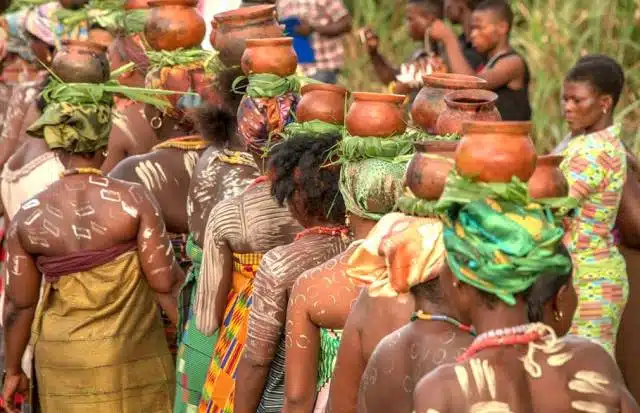
According to legend, Togbe Agorkoli was the ruler of Notsie, a town in modern Togo, and was known for ruling with an iron fist. He had the Ewe people living under his rule and anyone who spoke out against him was sentenced to death by a jury that would always find them guilty. The Ewe people, who had had enough of his oppressive rule, decided to seek the help of Togbe Tsali, a powerful hunter who was renowned in the area. Togbe Tsali agreed to assist them and allegedly cast a spell on the drums during a festive celebration to put Togbe Agorkoli and all the royals to sleep. He then rallied the populace and led them to squeeze through a gap in a tall mud wall, effectively freeing the Ewe people from Notsie’s control. To throw off their pursuers, Tsali convinced the Ewe people to flee by moving backward. After the exodus, the Ewe people were led by a wise man named Torgbui Ewenya. The word “Ewe” was taken from their formal leader, Torgbui Ewenya. This story of Togbe Agorkoli and Togbe Tsali is a significant part of the Ewe people’s history and their migration from Notsie to their present lands in Ghana and Togo. Image Credit: Ewe TV READ NEXT ON: Kundum Festival
The Monumental Independence Arch

The Independence Arch in Accra, Ghana is a prominent monument that serves as a reminder of Ghana’s hard-won independence. Situated within the Independence Square, the arch is flanked by stands that can accommodate up to 30,000 people, making it one of the largest city squares in the world. The Independence Square is home to three significant monuments that celebrate the country’s fight for freedom. The Independence Arch is located at the southern end of the square and overlooks the Gulf of Guinea. Facing the arch on the opposite side of the square is the Memorial of the Unknown Soldier, which pays homage to the brave Ghanaian soldiers who lost their lives fighting for their country. To the north of the square is a roundabout, where the Black Star Gate stands proudly at the center. This imposing monument is adorned with the Black Star of Africa, a symbol of both Africa and Ghana, and bears the inscriptions “AD 1957” and “Freedom and Justice”. The Liberation Day Monument is also located within the Independence Square. It commemorates Ghana’s independence from British colonial rule on March 6, 1957, and stands as a testament to the country’s journey towards self-determination. The Independence Square and its monuments are significant not only for their historical importance but also for their sheer size and capacity to host large gatherings. They serve as a testament to Ghana’s rich culture, history, and enduring spirit of independence. READ NEXT ON: Digya National Park
8 Top Tips for Writing Content

Writing content (blogs and articles) is a powerful strategy for growing your brand’s and company’s audience. One can successfully create a brand voice and identity through blog writing, and expanding viewership. Through a brand story, a well-written and organized blog draws customers and fosters customer loyalty. In the digital era of internet users, creating organic search content connected to a brand or business is becoming more crucial. A recent study found that up to 77% of internet users read blogs, making it a crucial component of marketing for any company. But how does one write a blog that’s engaging, persuasive, and well-received to draw in readers? Here are top 8 tips to think about and put in your blog posts. –Determine And Understand Your Audience Thinking about your audience or the target market you want to focus your writing on is a crucial step in creating a blog. Who will read your blog posts? What traits of people will find what you’re writing about intriguing and appealing? Use your own perspective as a reader of your content as the foundation for developing your brand through the subjects you write about. –Establishing Direction And Goals Before beginning, create a vision and clear goals. Think about the message you want to use as a common thread throughout all of your blog posts. Goals should be written down, along with research and possible writing strategies for achieving them. Decide how you will use your voice to share your views and opinions with your readers after defining the message you want to ring true with your audience. By clearly defining the objectives and direction you want to take for your online presence and brand image, you can save time. Your readers are probably going to be perplexed by the purpose and direction of your writing if you are. –Developing Your Own Original Content By carving out a specific market niche, you can set your company and brand apart from rivals who might otherwise appear to be similar. Since there are currently more than 600 million blogs online, it is becoming more difficult to attract readers. It is therefore crucial to have original content in order to stand out in the market for online blog readers. Outsourcing to writing professionals might be a worthwhile investment if you have a clear idea of what you want to accomplish with blogging but are unsure how to proceed. Writers who are imaginative, passionate and well-versed in the subject are needed to produce authentic, credible, and enticing content. Make a list of the subjects you’re interested in writing about, and think about the ideas and points you want to make in your writing. Avoid writing blog posts with a broad range of topics because readers will likely lose interest and be less likely to follow your writing. –Create Quality Content To Establish Your Voice The significance of finding one’s own voice, persona, and writing style is one that is frequently disregarded. Instead of what you say, readers are more interested in how you say it. For authenticity, it’s crucial to maintain your voice’s credibility and consistency across all posts while also reiterating the brand’s voice. Regular blog readers claim that the caliber of the content is the key to any blog’s success. –Maintain Consistency Consistency is valued by loyal blog readers who prefer to relate to the blogger than the writing itself. More than once a week of consistent blogging effectively doubles the rate of subscriber growth compared to less frequent bloggers. –Value Your Current Readers It’s important to balance focusing on gaining new viewers or followers with other priorities. It’s crucial to strike a balance between your efforts to gain new readers and satisfy your current ones. Don’t be afraid to interact with your audience, learn about their preferences and trends, and solicit their opinions on the information you provide. Establish ways to add value for them because, in the end, your readers are interested in what they can gain from reading your blog posts and writing topics. –The More The Better More than 2000-word articles and blog posts on a regular basis are more likely to produce effective results. Compared to the average length of blog posts in 2013, the length of posts has increased by 53%. Instead of using stock photos, include video content and authentic images to add value and credibility to the content. Your readers are more likely to share your posts if they are credible and real. Your audience will grow if your content is shared on other websites and references point back to your blogs. Businesses with blogs receive 97% more links to their websites. –Invest in your blog Although blogging can be a quick way to boost brand quality and image, it is better to think of it as a long-term investment. Many companies are using media platforms to try to leave their mark on society online. It’s more crucial than ever to have a strong online brand presence. Credit: Scott Jones READ NEXT ON: How To Rebrand And Launch A New Brand
Marian Ewurama Addy, First Host of the National Science and Maths Quiz
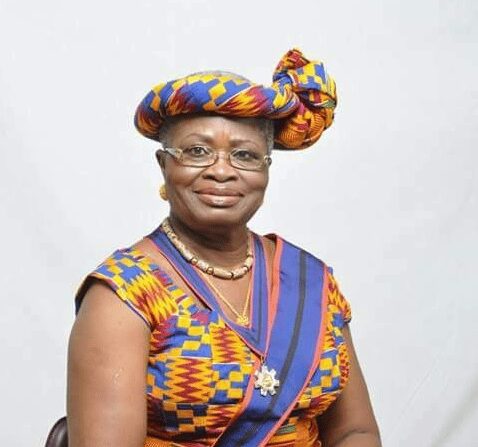
Marian Ewurama Addy, born Marian Cole, was a renowned Ghanaian biochemist who made significant contributions to the field of science. She was the first host of the National Science and Maths Quiz, an academic competition aimed at promoting the study of science and mathematics among Ghanaian students. In addition to her hosting duties, Addy was also a pioneer in her own right, becoming the first Ghanaian woman to attain the rank of full professor of natural science. Her accomplishments and dedication to her field made her an inspiration to many young girls and aspiring female scientists who sought to pursue careers in science, technology, engineering, and mathematics (STEM). Her Early Life Ewurama Addy, who was born on February 7, 1942 in Nkawkaw, Eastern Region of Ghana, was the daughter of Samuel Joseph Cole and Angelina Kwofie Cole. She attended St Monica’s Secondary School in Mampong-Ashanti between January 1956 and June 1960, where she excelled in sports and obtained her ‘O’ and ‘A’ level certificates. In addition, she attended the Holy Child Girls’ School in Cape Coast. Ewurama Addy earned a first-class honors bachelor’s degree in botany with chemistry from the University of Ghana, Legon. She later obtained a master’s degree and a doctorate in biochemistry from the Pennsylvania State University. Career Marian Ewurama Addy was the first female professor in the sciences in Ghana and the first female full professor of biochemistry at the University of Ghana. She also became the Head of the Department for Biochemistry, Cell, and Molecular Biology and retired in 2002 as a Professor of Biochemistry. She was involved in various organizations and committees, such as the Policy Committee on Developing Countries (PCDC), the National Board for Professional and Technicians Examinations (NABPTEX), the Science Education Programme for Africa (SEPA), and the Kwami Committee. Addy was a board member of the Ghana Atomic Energy Commission and a member of WHO Regional Expert Committee on Traditional Medicine. She was the Founder and First Executive Secretary of Western Africa Network of Natural Products Research Scientists (WANNPRES). Addy’s research focus was on the biochemistry of herbal medicinal products used by traditional medical practitioners to treat common ailments. She published 22 research publications pertaining to asthma, anaphylaxis, Type 2 diabetes, and hypertension in relation to herbal treatments. She was awarded Officer of the Order of the Volta for her contributions to science and girl-child education. One of Addy’s significant contributions was the National Science and Math Quiz show, which aimed to promote science and math to the public and influence more children, especially young girls, to pursue STEM-related fields of study. She served as the show’s first Quiz Mistress and made many appearances to the schools and clubs competing in the competition. Her influence in the general science knowledge of the youth of Ghana led to more females being interested and pursuing STEM-related fields of study. Awards & Honors READ NEXT ON: Monica Nancy Candny, First Class Maritime Engineering Graduate LASTEST POSTS:
Kundum Festival

The Kundum festival is celebrated by the Ahanta and Nzema people of the Western region of Ghana. It is celebrated to thank God for the abundance of food at the time of the harvest period in the area. Oral tradition and folklore claim that the festival got its start when the hunter Akpoley came across some dwarves dancing in a circle while on an expedition. He went back to his town and shared the dance with his people after watching it. The ritual dancing is connected to driving out the devil and evil spirits from cities and towns. The majority of the population of Axim and the nearby towns performs the dance during the festival. It originated with the Nzema people and advanced to the Ahantas in the Western region of Ghana. The festival lasts for four weeks, but the first three weeks see most of the action, especially the drumming and dancing, only at night and outside of the towns in a location called Siedu or Sienu. In each of the towns that make up the Ahanta and Nzema paramountcy, the festivals take place separately. Each town determines on its own which Sunday its local festival will begin. The attendees dress in distinctive attire, wear unique shoes, and occasionally wear masks. On the outskirts of the city, five different shrines are visited by musicians as the festival gets underway. Rum is poured on the ground as a libation and requests are made at the shrines for the town’s welfare. READ NEXT ON: Ngmayem Festival