History of St. Augustine’s College

St. Augustine’s College is a prestigious academic institution located in Cape Coast, Ghana, which is exclusively for male students. The school was founded in 1930 in Amissano, a small village near Elmina, and was established as a training college and seminary by the Roman Catholic Church. It was named after St. Augustine of Hippo, a revered Christian philosopher who lived from 354 to 430 AD. The college’s motto is “Omnia Vincit Labor,” which translates to “Perseverance Conquers All.” In 1933, the need for a separate Roman Catholic school arose, and on 6th August of that year, the Bishop of Cape Coast Vicariate Monsignor W. T. Porter and the Roman Catholic Church agreed that Cape Coast was the most suitable location. Therefore, a commemorative foundation stone was laid at the current site of the school in late 1935. Fr. Maurice B. Kelly, who was the Dean of the Training College at Amissano, which is now known as St. Teresa’s Seminary, became the first Head Dean or Headmaster. The school has 11 houses, and it has a rich history of academic excellence and sportsmanship. It has produced many notable alumni who have gone on to become successful professionals in various fields. The institution has a reputation for providing quality education and promoting discipline, leadership, and moral values. Overall, St. Augustine’s College is a renowned institution that has played a significant role in shaping the educational landscape of Ghana. Notable Alumni of St. Augustine’s College READ NEXT ON: History of Aburi Girls’ Senior High School
Beyond the Face: Amma Darko

Amma Darko is a highly acclaimed Ghanaian novelist, renowned for her insightful and vivid portrayals of everyday life in Ghana. Born in Koforidua, Ghana in 1956, Darko spent her formative years in Accra, where she developed a passion for literature and storytelling. After completing her studies in Kumasi, where she earned her diploma in 1980, Darko worked for the Science and Technology Center in Kumasi before moving to Germany in the 1980s. During her time in Germany, Darko continued to write and develop her craft, drawing inspiration from her experiences as an African woman living in a foreign land. Darko’s first novel, Beyond the Horizon, was published in Germany and marked the beginning of a prolific career as a writer. Her subsequent novels, including The Housemaid, Faceless, and Not Without Flowers, have been published in Ghana and have earned critical acclaim both at home and abroad. Darko’s work is known for its unflinching portrayal of the lives of ordinary Ghanaians, particularly women and children, and for shining a light on the many forms of exploitation and oppression that they face. Her writing is characterized by its vivid descriptions, its keen eye for detail, and its deep empathy for its subjects. Darko’s contributions to Ghanaian literature have been widely recognized, and her work has been the subject of numerous academic studies and literary analyses. Her novels have been discussed in Vincent O. Odamtten’s book Broadening the Horizon: Critical Introductions to Amma Darko, and in Louise Allen Zak’s doctoral thesis, “Writing Her Way: A Study of Ghanaian Novelist Amma Darko,” among other works. In recognition of her outstanding contributions to literature, Darko has received numerous awards and accolades throughout her career. She was awarded The Golden Baobab Prize for one of her novels, a prestigious literary award that celebrates excellence in African children’s literature. Darko’s works continue to inspire and educate readers around the world, and her legacy as one of Ghana’s greatest novelists is firmly established. Bibliography The following is a list of books written by Ghanaian author, Amma Darko, and their brief summaries: READ NEXT ON: Beyond the Face: Jane Naana Opoku-Agyemang
Manhyia Palace Museum

The Manhyia Palace Museum is a historical museum located in Kumasi, Ashanti, Ghana, and situated within the Manhyia Palace. Its history dates back to 1925 when it was first established as a private residence for Asantehene Agyeman Prempeh I, who had returned from almost three decades of exile. The palace was the residence of the Asante monarchs until 1896 when the British destroyed it during the Anglo-Asante wars. The current palace, which was built in 1925, serves as the official residence of the Asantehene, the traditional ruler of the Ashanti people. After its establishment, the Manhyia Palace served as a venue for important national events, meetings, and ceremonies, including the coronation of the Asantehene. It was also used as a residence for visiting dignitaries and heads of state. In 1995, the Palace was rehabilitated at the cost of 12,000 cedis, and subsequently reopened to the public on August 12th of that year by Otumfuo Opoku Ware II, the 15th King of the Ashanti Kingdom, as part of his Silver Jubilee celebration. The rehabilitation of the Palace aimed to preserve and showcase the culture and history of the Ashanti Kingdom. Today, the Manhyia Palace Museum provides a unique opportunity for visitors to gain an insight into the culture of Ashantiland and Ghana’s cultural legacy from before its colonization by Great Britain. It primarily serves “to commemorate (the Ashanti people’s) own kings, queens, and leaders and to communicate the riches of their history and culture to future generations”. The museum features video presentations and key historical items pertaining to Ashantiland and Ghana’s ancestry, including royal regalia, traditional weapons, musical instruments, and artifacts from the pre-colonial era. The Manhyia Palace Museum also houses a library and an archive, which contains rare books, manuscripts, and other historical documents related to the Ashanti Kingdom. Visitors can access these resources for research and study purposes. In sum, the Manhyia Palace Museum is an important historical landmark in Ghana and a must-visit for anyone interested in learning about the culture and history of the Ashanti people. Its establishment as a museum has helped to preserve and showcase the rich cultural heritage of the Ashanti Kingdom, making it accessible to both Ghanaians and visitors from around the world. READ NEXT ON: Kpando Fesi Pottery
Understanding the root causes of Child Streetism
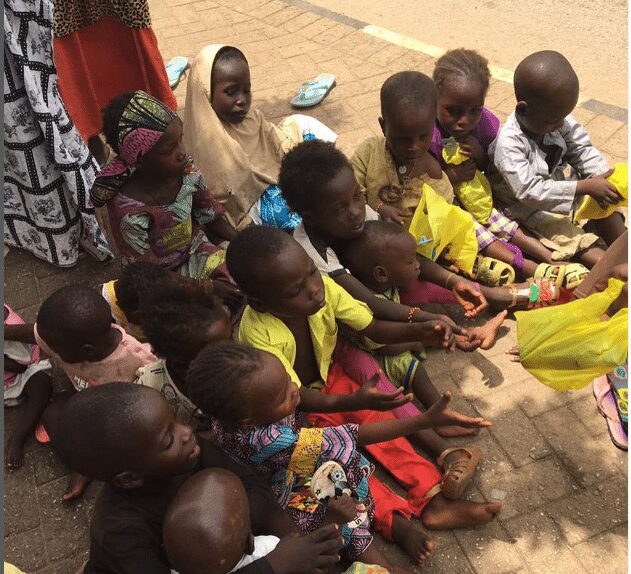
Child streetism – it may sound like a big and serious term, but it is a complex and multifaceted issue that affects millions of children around the world. So, let’s break it down into fun and understandable terms. First, we have poverty. This means that some children have to work on the streets to help support their families because they don’t have access to education and other opportunities. It’s like having a lemonade stand but instead of selling lemonade, these children are selling whatever they can find to make ends meet. Then, we have family breakdown. This happens when children run away from home due to abuse, neglect, or conflicts with family members. It’s like running away from home because your sibling won’t stop stealing your candy. But in this case, the consequences are much more severe. Next, we have lack of access to education. Education is super important in breaking the cycle of poverty and preventing child streetism. But some children living on the streets can’t access education due to financial constraints or lack of availability. It’s like being the only one in class without a pencil or notebook, but this time, it’s not just about feeling left out. Political instability and conflict are other factors that can lead to child streetism. In areas affected by war or violence, families may be forced to flee their homes, leaving children vulnerable to exploitation and abuse. It’s like a game of hide and seek, but instead of hiding from your friends, you’re hiding from danger. Urbanization and migration can also contribute to child streetism. When families move from rural areas to cities in search of better opportunities, they may struggle to find adequate housing or employment, leading to poverty and child streetism. It’s like moving to a new school and not knowing anyone, except this time, it’s a whole new city. Lastly, gender and ethnicity can also play a role. Girls are often at higher risk of exploitation and abuse on the streets, and children from marginalized ethnic groups may face discrimination and lack of access to social services, increasing their vulnerability to streetism. It’s like playing a game where some players are given a head start, and others are left behind. So, in conclusion, child streetism is a serious issue, but by understanding its root causes, we can take steps towards addressing it. Providing children with access to education, healthcare, and other basic necessities is crucial to breaking the cycle of streetism. Let’s work together to create a world where every child has the opportunity to thrive and play, both on and off the streets. READ NEXT ON: Child Streetism in Ghana: An Overview of the Issue
5 Tips For Moving On After Breakup

Breakups suck! They can be one of the most challenging and emotional experiences that one can go through. It’s tough to move on from the end of a relationship, especially if you were deeply invested in it. However, the good news is that moving on is essential for your emotional well-being and your ability to form new relationships. Here are five tips for moving on after a breakup that will make it a little more fun. Tip #1: Allow Yourself to Grieve Okay, we know it’s not the most fun activity on the list, but it’s essential to acknowledge the pain and sadness that you feel after a breakup. Allow yourself to cry, scream, binge-watch your favorite TV show, eat your favorite ice cream flavor, or do whatever else you need to do to release your emotions. Remember that grieving is a natural process, and it takes time to heal. So, let yourself have some time to wallow and then move on to the fun stuff. Tip #2: Take Time for Yourself Now, it’s time to invest in some self-care and focus on YOU! Take some time for yourself to rediscover your hobbies, do the things that you love, spend time with your friends and family, and do something new that you’ve always wanted to try. You can learn a new language, take a painting class, or even take up gardening. It’s time to invest in yourself and regain your sense of self. By doing so, you’ll improve your emotional well-being and be ready for the next chapter of your life. Tip #3: Don’t Look for Closure from Your Ex We get it; sometimes you want to call your ex and ask them for closure, but don’t do it. Closure comes from within, and looking to your ex for closure may prolong your healing process and prevent you from moving on. Instead, focus on finding closure within yourself. Talk to a friend, write in your journal, or see a therapist to work through your emotions. Remember, the past is the past, and it’s time to focus on your future. Tip #4: Practice Self-Compassion It’s easy to beat yourself up after a breakup, especially if you feel that you contributed to the end of the relationship. However, it’s essential to practice self-compassion and kindness towards yourself. Remind yourself that no one is perfect and that you did the best you could in the relationship. Be gentle with yourself as you navigate your emotions and healing process. Treat yourself to a spa day, get a massage, or do something that makes you feel good. Tip #5: Be Open to New Experiences Moving on after a breakup means being open to new experiences. This is the fun part! Try new activities, meet new people, and explore new places. You can go bungee jumping, take a cooking class, or travel to a new city. By being open to new experiences, you’ll create new memories and form new connections. Remember that life is full of opportunities, and by embracing them, you’ll be able to move on from your breakup and create a fulfilling life. In conclusion, moving on after a breakup can be challenging, but it doesn’t have to be all tears and misery. Allow yourself to grieve, take time for yourself, don’t look for closure from your ex, practice self-compassion, and be open to new experiences. Remember that healing takes time, and it’s important to be patient with yourself as you move through the healing process. By following these tips, you’ll be on the path to moving on and creating a fun and fulfilling life. So, go out there and have some fun! READ NEXT ON:The Art of Apologizing in Relationships
10 Key Metrics for Email Campaign Success

Email Campaign Success is not solely dependent on creating visually appealing and well-written emails but also on measuring the effectiveness of a campaign. Email marketing is highly effective for businesses looking to reach out to customers and prospects, increase brand awareness, drive sales, and build lasting relationships. By tracking and analyzing various metrics, businesses can gain insights into how their subscribers are engaging with their content and make informed decisions on how to improve future campaigns. In this article, we will explore 10 ways to measure the success of your email campaigns. 1. Open Rate This is the percentage of subscribers who opened your email. It is a good indicator of how well your subject line and pre-header text performed in getting your subscribers to open your email. A high open rate means that your subject line was effective in grabbing attention and encouraging subscribers to open your email. 2. Click-Through Rate (CTR) This measures the percentage of subscribers who clicked on a link in your email. This metric is a good indication of the relevance and value of your content. If your CTR is low, it could mean that your content is not engaging or that your calls-to-action (CTAs) are not clear or compelling enough. 3. Conversion Rate This measures the percentage of subscribers who completed the desired action, such as making a purchase or filling out a form. This is the ultimate goal of your email campaign, and a high conversion rate means that your email was successful in persuading your subscribers to take the desired action. 4. Bounce Rate This measures the percentage of emails that were not delivered to the intended recipient. High bounce rates can be caused by invalid email addresses, full inboxes, or technical issues. A high bounce rate can negatively affect your deliverability and should be addressed as soon as possible. 5. Unsubscribe Rate This measures the percentage of subscribers who chose to unsubscribe from your emails. While it is natural to lose some subscribers over time, a high unsubscribe rate can be a sign that your content is not relevant or that you are sending too many emails. 6. Forward Rate This measures the percentage of subscribers who forwarded your email to someone else. This metric can be a good indication of how much your subscribers value your content and whether they find it shareable. 7. Revenue Generated This measures the amount of revenue generated from your email campaign. If you have an e-commerce store, you can track sales directly attributed to your email campaign. If not, you can track the number of leads generated or the number of appointments scheduled as a result of your email campaign. 8. ROI This measures the return on investment of your email campaign. To calculate ROI, you need to compare the revenue generated to the cost of creating and sending the email campaign. 9. Subscriber Growth Rate This measures the rate at which your email list is growing. A healthy subscriber growth rate indicates that your email marketing efforts are successful in attracting new subscribers. 10. Engagement Rate This measures the level of engagement of your subscribers with your email content. This metric can be measured by looking at the number of social media shares or comments on your email content. In conclusion, measuring the success of your email campaigns is crucial to improving your future campaigns and maximizing your ROI. By analyzing these 10 metrics, you can gain insights into how your subscribers are engaging with your content and make informed decisions about how to improve your email campaigns. Remember to test different strategies and continually refine your approach to find what works best for your audience. READ NEXT ON: Avoiding Spam Filters: Ensuring Your Emails Get Delivered
The Legacy of Paa Grant: A Pioneer of African Nationalism
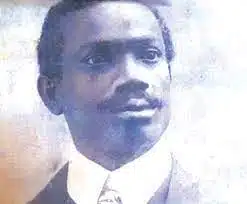
George Alfred Grant, popularly known as Paa Grant, was a prominent merchant and politician in the Gold Coast (now Ghana), born on August 15, 1878, in Beyin, Western Nzema. He hailed from an influential merchant family and was the son of William Minneaux Grant and Madam Adjua (Dwowa) Biatwi of the Aboradze clan. Paa Grant has been dubbed “the father of Gold Coast politics” due to his contribution to the country’s political landscape. Grant received his education at Wesleyan School in Cape Coast, now known as Mfantsipim School, and was tutored privately by Joseph D. Abraham, a wealthy merchant friend of his father. He later worked in the timber trade, first at Axim and then for five years in the Ivory Coast. In 1896, he established his own firm, George Grant and Company, which became successful due to his entrepreneurial skills. Paa Grant’s business acumen took him to Britain in 1905 where he established business contacts with leading timber companies in Europe and the United States. During World War I, between 1914 and 1919, he chartered ships to transport timber to Britain and the USA. He further expanded his operations, opening offices in London, Liverpool, and Hamburg between 1920 and 1922. In the Gold Coast, he expanded his operations to Dunkwa, Sekondi, and Akim Abuakwa. In recognition of his contributions to the development of the Gold Coast, Paa Grant was appointed to the Legislative Council in 1926, representing Sekondi. He was also a member of the Aborigines’ Rights Protection Society and contributed to many development projects, including the introduction of street lighting and pipe-borne water to Sekondi and Axim. Paa Grant was a political activist and one of Ghana’s Founding Fathers. He founded the United Gold Coast Convention (UGCC) in August 1947, serving as its first president. He played a vital role in the country’s struggle for independence, and his efforts helped pave the way for the country’s eventual liberation. He was also responsible for paying the fare for Kwame Nkrumah’s return to Ghana from the United States, a move that saw Nkrumah become the country’s first president. Political Activism During and after the Second World War, George Alfred Grant, also known as Paa Grant, recognized the discriminatory and unfair colonial practices Africans in the Gold Coast were facing. To address this issue, he decided to take steps towards adequate representation of African interests. In 1947, Grant invited J. B. Danquah and other like-minded individuals to a meeting in Saltpond to launch a nationalist party, with the goal of achieving self-government. R. A. Awoonor-Williams, Edward Akufo-Addo, and Emmanuel Obetsebi-Lamptey were among the 40 people who attended the meeting, and they founded the United Gold Coast Convention (UGCC) on August 4, 1947. Kwame Nkrumah, who was recommended by Ebenezer Ako-Adjei, was elected as the UGCC secretary-general, and Grant paid for Nkrumah’s £100 boat fare to return to Ghana from Liverpool that year. However, Nkrumah later split from the UGCC to form the Convention People’s Party (CPP), while Grant eventually focused more on his businesses than politics. Nonetheless, they maintained contact, and Nkrumah visited him two days before Grant’s death in Axim on October 30, 1956, at the age of 78. In 1955, Grant suffered from an attack of apoplexy from which he never fully recovered. Despite this, his contributions to the struggle for Ghana’s independence were significant, and he remains a respected figure in Ghanaian history. Paa Grant Soccer Academy Kim Tyrone Grant, a former Ghana Black Stars national player, established the Paa Grant Soccer Academy in 2009 as a tribute to his grandfather’s commitment and hard work toward Ghana’s independence from the colonial rule until 1957. George Grant University of Mines and Technology During a special congregation held at the University of Mines and Technology (UMaT) located in the Western Region of Ghana, President Akufo-Addo announced on 12 January 2018 that the university would be renamed the George Grant University of Mines and Technology. The university was renamed in honor of George Grant, who was a founding father of Ghana’s fight for independence and also a native of the Western Region. READ NEXT ON: Elizabeth Sey: First Female Graduate of University of Ghana
History of Aburi Girls’ Senior High School

Aburi Girls’ Senior High School, also known as ABUGISS, is a Presbyterian senior high boarding school for girls located in the Eastern Region of Ghana. The school was officially established as a secondary school for girls in 1946, with only seven students. However, its roots can be traced back to 1852 when the Basel Missionaries opened a school at the primary level for girls at their mission station in the town. In the 1920s, the Scottish Mission took over the school during World War I and added a teacher-training course alongside a kindergarten section and a middle school for girls. In 1946, secondary classes were introduced side by side with the teacher-training course. When the Basel Mission and the Scottish Mission left, the Presbyterian Church of the Gold Coast took over the management of the school in 1950. The secondary school was physically separated from the teacher training classes and moved to its present site on the outskirts of Aburi in 1954. Initially, classes ran from Form 1 to Form 5 until a Sixth Form was added in 1958. The school presently runs on the 3-year Senior High School system. In 1972, the Methodist Training College located on the southern side of the school was closing down, and the first Ghanaian Headmistress, Joyce Asibey, initiated negotiations with the Methodist Church to acquire the college premises for the school. The compound had a dining hall, dormitory, and classrooms, so it was used to house Form One student to reduce the incidence of bullying. In the 1990s, due to an increase in numbers, this arrangement was stopped, and the old “Metico” building is now a bonafide house known as Irene Anderson House, just like the entire compound. The school is located on the easternmost part of the ridge forming the Akuapem Mountains, about a mile south of Aburi. Aburi Girls Senior High School has a reputation for academic excellence and for producing confident, well-rounded young women. The school has a vibrant alumni network, and many of its graduates have excelled in various fields, including politics, academia, business, and the arts. Achievement From 2011 to 2015, Aburi Girls Senior High School excelled in the West African Senior School Certificate Examination (WASSCE), securing the top awards in both Mathematics and Science categories. Furthermore, in 2015, the school swept all three top prizes in the National Best School and Best Teacher Awards for the Senior High School Division in the Eastern Region. Notable Alumni READ NEXT ON: History of Opoku Ware School
Dipo Festival
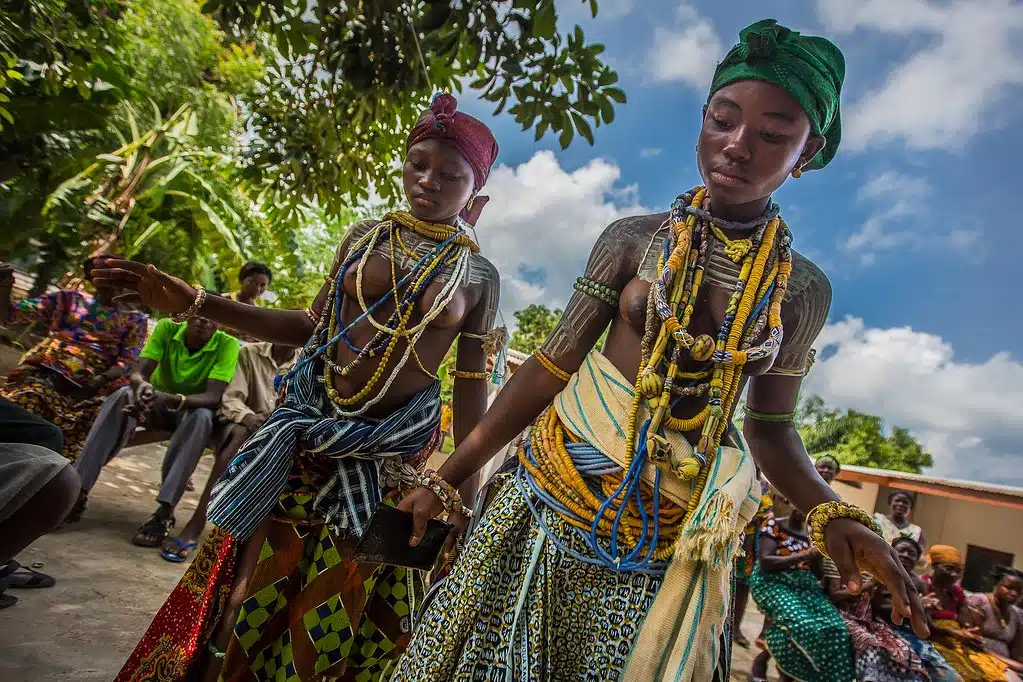
Dipo festival is a traditional festival and practice in Ghana that has gained popularity but has also been criticized by some people. It is, however, one of the most attended events in the country and attracts many tourists. The festival is celebrated by the people of Odumase Krobo, a town in the Eastern region of Ghana, every year in the month of April. The Dipo Rites is a traditional way of ushering virgin girls into puberty or womanhood, and it signifies that a participating girl is of age to be married. Parents who hear the announcement of the rites send their qualified girls to the chief priest. However, these girls would have to go through rigorous rituals and tests to prove their chastity before they can qualify to partake in the festival. On the first day of the rites, the girls have their heads shaved and dressed with cloth around their waist to just their knee level. This is done by a special ritual mother and it signifies their transition from childhood to adulthood. They are paraded to the entire community as the initiates (dipo-yo). Early the next morning, the chief priest gives the initiates a ritual bath. He pours libation to ask for blessings for the girls. He then washes their feet with the blood of a goat which their parents presented. This is to drive away any spirit of barrenness. The crucial part of the rite is when the girls sit on the sacred stone. This is to prove their virginity. However, any girl found to be pregnant or not a virgin is detested by the community and does not entice a man from the tribe. The girls are then housed for a week, where they are given training on cooking, housekeeping, and childbirth and nurture. The ritual mothers give them special lessons on seduction and how their husbands will expect to be treated. They learn the Klama dance which will be performed on the final day of the rites. After the one-week schooling, they are released, and the entire community gathers to celebrate their transition into womanhood. The girls are beautifully dressed in rich kente cloth accessorized with beads around their waist, neck, and arms. With singing and drumming, they perform the Klama dance. At this point, any man interested in any one of them can start investigating her family. It is assumed that any lady who partakes in the rites not only brings honor to herself but to her family at large. It is done to initiate young women into knowing their responsibilities before stepping into marriage. Dipo Rites is a cherished tradition in the Krobo community, and it is seen as an important step in the development of young women. It is a rite of passage that has been passed down from generation to generation, and it is deeply rooted in the culture and beliefs of the people. READ NEXT ON: The Significance of Naming Ceremonies in Ghanaian Culture
Kpando Fesi Pottery

Kpando is a small town situated in the Volta Region of Ghana. It is approximately five hours away from the capital city of Accra. The town is surrounded by lush forests and is home to many small businesses and artisanal workshops. One of the most notable artisanal workshops in Kpando is the Kpando Fesi Pottery. The Kpando Fesi Pottery was founded in 1998 as an adult education group for women living in communities in the Volta Region. The cooperative provides a space for members to earn a living through the production of ceramic goods. Initially, the pottery cooperative started with only 35 women, but it has grown significantly over the years and now employs many more women from the surrounding communities. The women at the Kpando Fesi Shed take pride in their craft, and everything in the workshop is hand-built with care and precision. Their unique style is striking, featuring a warm shiny black patina finish and intricate textures. The pottery produced here includes a variety of items such as bowls, plates, mugs, vases, and figurines. Visitors to the Kpando Fesi Shed are welcome to watch the women at work and learn about the process of pottery making from start to finish. The tour begins with clay mixing, followed by sculpting and the firing process. It is a humbling experience to witness the skill and dedication of these powerhouse women and to appreciate the effort that goes into each piece of pottery. Kpando Fesi Pottery is a significant cultural institution in Kpando, Ghana, that provides a space for women to earn a living through their craft. Visitors to this workshop will witness the beauty of Ghanaian culture and the skill of local artisans. READ NEXT ON: Keta Lagoon: Ghana’s Largest Coastal Lagoon