The Brouhaha of Ghana SIM card registration

By March 31, 2022, every Ghanaian above age 18 and bearing a SIM card is required to register their SIM to avoid the termination of their mobile user number, and this has compelled many Ghanaians from every side; from cities across the hinterlands to undergo this exercise. The registration purported to curb cybercrime be it mobile money fraud, impersonation, scam, and other related fraudulent activity wrought by unscrupulous persons in society. In as much, one may argue this registration exercise is a scheme brought about by the government to formally tax citizens as well as increase the tax base to cover the informal sector is also highlighted. Regardless of what it may be on the side of the government or the telecom companies, Ghanaians are meted with the fate, uncompromisingly, to get their SIM registered in the span of six months, averaging 182 days. 182 days to register every SIM card bearing national and foreigners in the country? To what end? One may ask- to the benefit of the Consumers, the telecoms, or the government? One thing is somewhat certain, the stress it puts many Ghanaians through, the ordeal to be at registration centers very early in the day to get their SIM registered- the continuous health hazard we put ourselves through in this endemic period of our time. I recount an ordeal one nobleman had to go through at the registration center at the time of registration. The man, as required by the traditional House of chiefs was given a paramount name after he was installed as a chief years ago in his council but I guess technology has no regard for things of tradition, I’m afraid, the man exclaimed as he was directed to go for a gazette changing his name from the paramount given name to reflect the name on the Ghana Card. Thus, a name given at birth to proceed with the registration. Who made such decisions that have no room for the traditional council? He asked angrily! I’m sure many Ghanaians will ask the same- why this burden? But it is a hurdle we all must bear with all willingness to formally help for the cause of our country, and for now, we all live to see! In all this, I urge you all to register your SIM card today! By Mac-King T. Thompson READ NEXT ON: Dear Freshmen by Akorfa Ama Akoto
A nation polarized by religion and superstition

This is an introspection, as I sit back in my track and reflect on the recent happenings in the country, precisely the incident involving the alleged murder of an elderly woman accused of witchcraft in Nalerigu in the Northern region attributed to superstition. The deceased, identified as Mma Rukaya, moved to the area from Janga, in the same region because of similar accusations. A society that would hide behind everything including religion and superstition to do whatever it takes even to take the life of another. Not forgetting the sad story of Madam Akua Denteh and the subsequent mob injustice metered by another as a result of alleged ‘witchcraft’ at ‘Gonja’ in the Northern part of the country still rings a bell. This may strike you like an uncomfortable quest but the question still lingers in my mind; why would a well-behaved human take away the life of another because of beliefs? A said superstitious belief that’s beyond logic and reason. What controls our society and the nation today? Politics or Religion; perhaps, I am more prone and conversant with the latter because that has been the bane and the fabric of our society. As a child and growing up, like a bait; one cannot skip this necessary initiation if it can be called such but religion runs through all our institutions and beyond. And this makes one ponder; what’s the practical reason for this gross misplaced mental servitude that has wrecked lives, homes, and nations? Indeed, you may not possess all the answers but have you asked yourself why you engage in a dire religious practice? Look at [some] nations around and it may strike you harder, wars, injustice, and corruption which can be pointed to religious conflict and others. It is sad to note people are been executed because of religious falter. Who has the moral right to judge others? Last two semesters back in my studies at the university, I met an exchange student from a European country and in a conversation, pointed out how at the turn of every corner in the capital, you are faced with a religious ‘bunker’ with a shout more than the pitch of decibels emanating from such places! I dared not ask why. It seems we are in the crusading years of England, imagine! And that was many years ago! We are behind the age of enlightenment, he said. A bit harsh as it may sound but I couldn’t agree less. A nation of highly religious people but with questionable gestures and attitudes towards nation-building; talk about politics, the least said the better. We have leaders who hide behind religion, sworn in, albeit in the name of such but leave the nation bereft if that can be said about many of them. I look forward to that day when the exchange student will come again but to a different narrative; one devoid of the noise and brouhaha of god sent a compliance that favors those who wield power and leave the ordinary back at the pecking order because their voices cannot be heard by a said divine, be it traditional, the Orthodoxor otherwise. And so, we must rise, and get rid of a certain childhood initiation that does not march our current realities and our modern societal dispensation. Culture calls for change! The norms must be changed and we must write a narrative that favors common sense, justice, and the dignity of all human lives. Let’s pull down superstitions that trample on human rights! By Mac̶ King T. Thompson READ NEXT ON: Tourism; the Other Ghanaian Pandemic another piece by Mac̶ King T. Thompson
Paradise in Kintampo

Kintampo is a place of hidden treasures, and one such treasure is Fuller Falls. Located at Yabraso, 7km west of Kintampo, this waterfall is a paradise that attracts thousands of visitors from all over the world each year. Its estimated terrain elevation above sea level is 173 meters, and it gently flows from the east over a series of cascades foaming rapids of the Oyoko river, a tributary of the Black Volta. The Fuller Falls is a hidden gem that allows visitors to bask in the natural beauty of Ghana’s hinterlands. The waterfall is surrounded by lush green vegetation, which creates a breathtaking view that is hard to find elsewhere. The serene environment and the relaxing atmosphere make it a perfect place to unwind, rejuvenate, and connect with nature. The falls are named after a British colonial administrator named Fuller, who is said to have discovered them while exploring the region. The cascading waterfalls are the main attraction and are a sight to behold. The falls are not very tall, but they make up for it in width and volume. The rapids that form the falls create a serene and calming sound that can be heard from a distance. The area around the falls is perfect for picnics and outdoor activities. The lush vegetation provides natural shade, making it a perfect spot to relax and enjoy a meal with friends and family. Visitors can also swim in the natural pool formed by the falls or take a refreshing shower under the cascading water. For nature enthusiasts, Fuller Falls is a must-visit destination in Kintampo. The cascading waterfalls, the serene environment, and the lush green vegetation create a breathtaking view that is hard to find elsewhere. The falls are not very crowded, making it an ideal destination for those seeking a peaceful and relaxing experience. Visitors can also take a hike to the top of the falls, which offers a stunning view of the surrounding landscape. The hike is moderately challenging, but the view from the top is worth the effort. It’s also a great spot for photography enthusiasts who want to capture the beauty of the falls and the surrounding landscape. The river that feeds the falls eventually flows into the Black Volta at the border between Brong Ahafo and the Northern Region at Dwire Kumboe. The river is home to various aquatic species, making it a popular spot for fishing enthusiasts. Visitors can also take a boat ride down the river to explore the surrounding area and enjoy the scenic beauty of the river. Fuller Falls is a paradise that offers an escape from the hustle and bustle of everyday life. Whether you’re looking for a place to spend a quiet weekend or a spot to explore with friends and family, Fuller Falls has something to offer. It’s a hidden treasure that allows visitors to connect with nature and enjoy the natural beauty of Ghana’s hinterlands. READ NEXT ON : The Gambaga Escarpment
The Gambaga Escarpment

The Northern border of Ghana’s North East Region is defined by the Gambaga escarpment, a long line of cliffs that stretch for nearly 100km from Walewale to the Ghana-Togo border at Tusugu. Composed of horizontal layers of sandstone, the scarp causes the southbound White Volta River to turn west and follow the Western half of the scarp until it finally turns south again at Kpasinkpe. The elevation of the scarp, ranging from 1,000 to 1,500 feet (300 to 460 meters), creates a relatively cool and moist climate, ideal for the cultivation of grains and yams as well as stock raising. The Gambaga scarp is home to the only sizable town on the plateau, Gambaga, which was originally a cotton-collecting center and is now a popular hill station. Despite being the only major town on the plateau, Gambaga has a rich history and culture. The town is known for its traditional architecture, which includes unique round huts made of mud and thatched roofs. These huts, known as Gurunsi architecture, are a testament to the town’s heritage and are a popular attraction for visitors. In addition to its architecture, Gambaga is also home to the Gambaga Witch Camp, a community of women who have been accused of witchcraft and forced to flee their homes. The Witch Camp has become a symbol of the struggle for women’s rights and the fight against discrimination and persecution. The Gambaga scarp is also a significant transportation hub for the region. The only major road of the scarp runs from Gambaga to Walawale and from there to Kumasi. This road is an important link between the North East Region and the rest of the country, facilitating the movement of goods, people, and services. If you are a tourist visiting Ghana, the Gambaga scarp and the town of Gambaga are must-see destination in the North East Region. The scarp’s unique composition and elevation create a cool and moist climate, providing an ideal environment for cultivation and stock raising. This has led to a vibrant agricultural community, with stunning landscapes and breathtaking views. In Gambaga, you will find a rich cultural heritage, with unique traditional architecture and the Gambaga Witch Camp, which is a testament to the fight against discrimination and persecution. The town is also a popular hill station, offering visitors a cool and refreshing break from the heat and humidity of other parts of Ghana. The Gambaga scarp and Gambaga town are easily accessible by road, making them an ideal destination for a day trip or a longer stay. You can experience the local culture, sample the traditional cuisine, and enjoy the beautiful scenery of the scarp and surrounding areas. Whether you are a history buff, a nature lover, or simply looking for a unique and unforgettable experience, the Gambaga scarp and Gambaga town are a destination you do not want to miss. So, pack your bags and head to the North East Region of Ghana to explore this beautiful and fascinating part of the country. Location of the Gambaga Escarpment READ NEST ON: Assin Manso Slave River Site: The Final Stop on Ghana’s Slavery Route
GHANA MUST GO: Deportation of Over a Million Ghanaians from Nigeria

In 1969, Ghana’s Prime Minister Kofi Abrefa Busia enacted the “Ghana Aliens Compliance Order” law, which resulted in three million Nigerians and other African and non-African immigrants being asked to leave Ghana. This was due to the fact that they made up 20% of the country’s population at the time. This law caused a great deal of upheaval and forced many individuals to leave their homes and families behind. Fast forward to January 1983, when President Shehu Shagari of Nigeria issued an executive order that expelled two million undocumented West African migrants, over half of whom were from Ghana. The order was allegedly a response to the religious disturbances that had occurred in parts of Nigeria in 1980 and 1981 (known as the Kano Riots). These West African immigrants had been attracted to Nigeria due to the 1970s oil boom, but by 1983 the economy had weakened and it was an election year. The Nigerian politicians hoped that the expulsion would prove popular with the electorate. During their return to Ghana, these migrants used a type of large, cheap, matted woven nylon chequered bags to carry their belongings. These bags became known as “Ghana Must Go”. Despite their origins as a symbol of displacement and forced migration, these bags have become popular for their durability and affordability, and are still widely used today. Learn more: GHANA MUST GO: The ugly history of Africa’s most famous bag by Mail & Guardian READ NEXT ON: Fort Amsterdam, a World Heritage Site in Kormantin, Central Region, Ghana
Shrewd Communications, Best Ghanaian Creative Agency

Shrewd Communications is a Ghanaian creative agency that specializes in providing a wide range of marketing services to renowned brands across various industries. The agency has a proven track record of delivering creative solutions that drive growth and revenue for its clients. With its multi-service offerings, Shrewd Communications is a one-stop-shop for businesses looking to establish a uniform brand identity across the digital universe. One of the core strengths of Shrewd Communications is its expertise in crafting, designing, and executing digital marketing strategies across multiple advertisement platforms and social media networks. The agency’s team of skilled professionals works collaboratively to understand its clients’ unique needs and create tailored solutions that deliver maximum results. By leveraging its vast knowledge of the digital economy, Shrewd Communications helps clients increase their online visibility and reach their target audiences with precision. Shrewd Communications’ range of services includes brand consultancy, analytics, and marketing value, making it a valuable partner for businesses looking to build their brand and increase their revenue. The agency’s brand consultancy service provides clients with strategic advice on how to create a strong brand identity that resonates with their target audience. This service helps clients build a cohesive brand image across all their marketing channels, which is critical for establishing credibility and trust with customers. The analytics service offered by Shrewd Communications provides clients with insights into their marketing campaigns’ performance. This information is critical for identifying areas that need improvement and optimizing marketing campaigns for maximum effectiveness. By analyzing data on user behavior, traffic sources, and conversion rates, Shrewd Communications helps clients make informed decisions about their marketing strategies and investments. Shrewd Communications’ marketing value service is geared towards helping businesses generate revenue through effective marketing campaigns. The agency’s team of experts works with clients to develop and execute marketing campaigns that deliver measurable results. By focusing on areas such as search engine marketing, social media, and mobile marketing, Shrewd Communications helps clients reach their target audience with precision and drive conversions. The agency’s design services cover a wide range of areas, including branding, graphic design, and web design. With its team of creative professionals, Shrewd Communications has established itself as a leader in the design industry, creating memorable brand identities that stand out in a crowded marketplace. One of the agency’s core design services is branding, which involves developing a unique brand identity for businesses. Shrewd Communications works with clients to develop a brand identity that is consistent with their vision and values. The agency’s team of designers creates visual elements such as logos, color schemes, and typography that reflect the client’s brand personality. Shrewd Communications also develops brand guidelines that help businesses maintain consistency across all marketing channels, ensuring a cohesive and recognizable brand identity. Graphic design is another area of expertise for Shrewd Communications. The agency’s designers create visually compelling designs that communicate the client’s message effectively. This includes designing marketing collateral such as brochures, flyers, and posters that capture the attention of the target audience. Shrewd Communications also designs packaging, exhibition stands, and other marketing materials that help businesses stand out in a crowded marketplace. Web design is another area where Shrewd Communications excels. The agency’s team of designers creates responsive websites that are optimized for user experience and search engine visibility. Shrewd Communications also offers e-commerce website design, ensuring that businesses can sell their products and services online. The agency’s web design services include website hosting, content creation, and website maintenance, ensuring that businesses can focus on their core operations. Web design is another area where Shrewd Communications excels. The agency’s team of designers creates responsive websites that are optimized for user experience and search engine visibility. Shrewd Communications also offers e-commerce website design, ensuring that businesses can sell their products and services online. The agency’s web design services include website hosting, content creation, and website maintenance, ensuring that businesses can focus on their core operations. With all that said, Shrewd Communications is a multi-service, trustworthy, and agile creative agency that specializes in creating strategies, creatives, and campaigns for clients. With its range of services that cover brand consultancy, analytics, and marketing value, the agency is a valuable partner for businesses looking to establish a uniform brand identity across the digital universe. If you are looking to build brand visibility and drive revenue through effective marketing campaigns, Shrewd Communications is the agency to choose. Instagram: https://www.instagram.com/shrewd_communications/ READ NEXT ON: Find out more about TwoCents and why you should sign-up
Christmas House Party
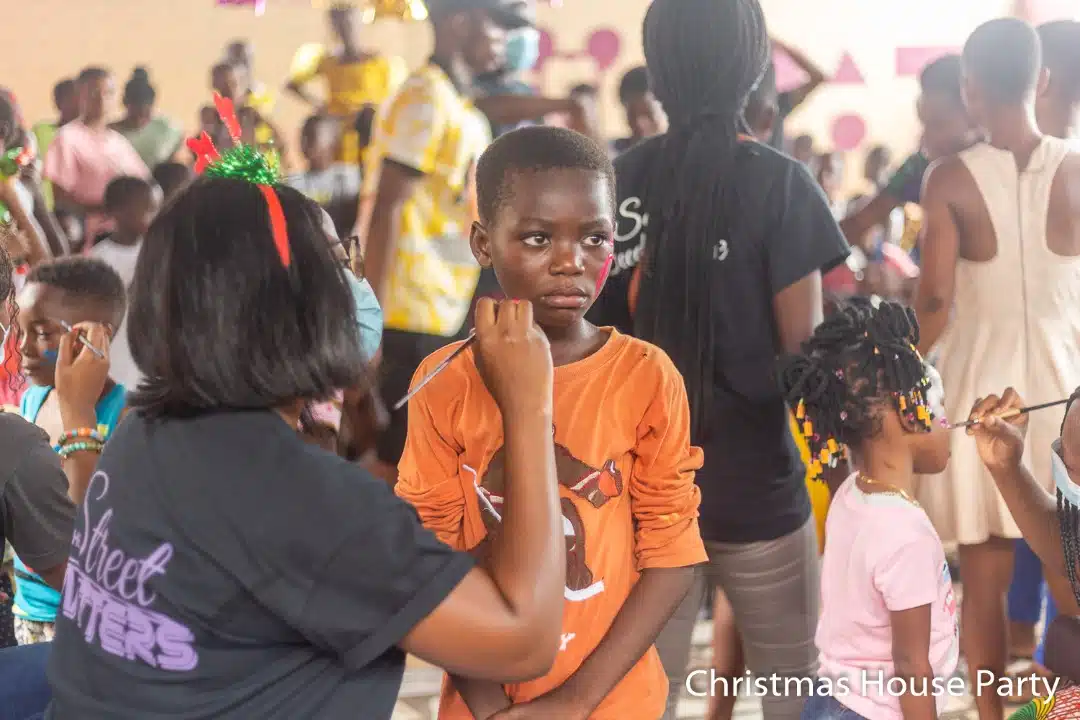
Street children and homeless children are a global phenomenon, found in cities, towns, and villages regardless of a country’s economic status. The United Nations estimates that there could be up to 150 million street children worldwide. However, these children are often unknown to social care and government organizations, making it difficult to provide them with vital services such as education and healthcare. Despite the complexities of their circumstances and their vulnerability to exploitation and violence, organizations like The Shrewd Foundation work tirelessly to meet the needs of street children. During the festive season, I had the privilege of joining my teammates at The Shrewd Foundation in collaboration with Spring-Up Global Network to donate and celebrate with orphans and street children at Great James Academy in Chorkor, Accra during our Christmas House Party. Why Christmas House Party? The goal was to provide these vulnerable children with a sense of hope and support, as they often face complex circumstances and are at risk of exploitation and violence. Our activities included face painting, breaking of bread, candle wishes, health engagement on COVID-19, a dance competition, and a donation to the academy. Every moment spent at this outreach was truly fulfilling, as we got to put smiles on the faces of these children and make a positive impact in their lives. Through these kinds of initiatives, we can show street children that they are not alone, and we can provide them with a glimmer of hope for a better future. While there is still much work to be done to address the issue of street children globally, it is heartening to see organizations like The Shrewd Foundation and Spring-Up Global Network making a difference in their lives. READ NEXT ON : My Philanthropy Journey
Dr. Grace Karikari’s KENKAN Books: Promoting Ghanaian Languages globally

In today’s globalized world, many African languages are at risk of dying out as younger generations opt for more popular languages like English or French. This trend is not unique to Africa, but it is a significant concern that threatens cultural diversity and heritage. Fortunately, individuals like Dr. Grace Karikari are working hard to promote African languages and cultures through Kenkan Books. About Dr. Grace Dr. Karikari is a Ghanaian-born author, YouTuber, public health educator, and researcher based in the United States. Dr. Grace Karikari (Dr. Gee) is an assistant professor, educator scholar, and researcher at the University of North Dakota School of Medicine and Health. Assistant Professor at the University of North Dakota, Grace Karikari Ph.D., MPH, CHES is a Ghanaian academic making sure that Ghanaian kids in the diaspora don’t lose their knowledge of their local Ghanaian languages. Her journey with Kenkan Books As a mother of two young children, she noticed a lack of fun and engaging educational resources to help promote the speaking and learning of the Ghanaian languages for families in the diaspora. To address this issue, Dr. Karikari and her family took the initiative to develop basic learning materials called KENKAN Books. The name KENKAN was derived from the Asante Twi word for “read.” The mission of KENKAN Books is to produce educational materials that provide children with the opportunity to learn and practice different local languages of African countries. At present, KENKAN Books have publications in Ewe, Ga, and Twi languages. They are continuously working on expanding their resources to cover more African languages. KENKAN Books have brightly colored and illustrated pages that make them fun and easy for children to read and learn from. These books aim to promote African languages and culture while empowering children to learn more about their roots. Dr. Karikari’s efforts to promote the speaking and learning of the Ghanaian languages are highly commendable. By creating fun and interactive learning resources for children, she is helping to preserve African heritage and promote cultural diversity. As Africans, we all have a role to play in supporting and promoting our heritage. We can start by speaking our local languages at home and teaching them to our children. Parents can also encourage their children to read African literature and expose them to African culture through music, art, and food. It is essential to support initiatives such as KENKAN Books that promote the learning of African languages. As we embrace globalization, we should not forget our cultural identity and roots. It is through our languages and culture that we can preserve our heritage and promote cultural diversity. Dr. Grace Karikari is an inspiration to us all. Her efforts to promote African languages and culture are a reminder that we all have a part to play in supporting Mother Ghana and promoting Africa at large. We should continue to celebrate and promote the diversity that makes Africa unique. Dr. Karikari’s efforts to promote African languages and culture are truly inspiring. Through her KENKAN Books initiative, she is not only providing a valuable resource for families in the diaspora but also promoting the importance of preserving local languages and culture. Overall, Dr. Karikari is a shining example of what it means to be a responsible and engaged citizen. By promoting the use of local languages and working to improve health outcomes in underserved communities, she is making a positive impact both locally and globally. As individuals, we all have a part to play in promoting African languages and culture. Whether it’s by speaking your local language at home or supporting initiatives like KENKAN Books, we can all contribute to the preservation and celebration of African culture. Let us all join in and do our part to support Mother Ghana and promote Africa at large. Website: https://www.kenkanbooks.com/ READ NEXT ON: Deborah Osei-Tutu: First to graduate from KNUST’s Physics department as Best Student.
Beyond the Face- Oheneyere Gifty Anti

Oheneyere Gifty Anti is a force to be reckoned with in the world of journalism and broadcasting in Ghana. She is not only an accomplished journalist and broadcaster but also a mentor and role model to many aspiring journalists, especially women. Born and raised in Tema, Ghana, Auntie Gifty attended Tema community 8 “Number 1” Basic School before moving on to Mfantsiman Girls Secondary School for her second-cycle education. After completing her secondary education, she pursued a degree in journalism at the Ghana Institute of Journalism. Auntie Gifty’s career in journalism began when she landed her first job as a floor manager at GTV. She quickly climbed the ranks and eventually became a TV presenter. Over the years, she has established herself as a coach, gender advocate, and feminist, and is now the CEO of GDA Concept and host of the Stand Point program on GTV. Throughout her career, Auntie Gifty has been a fierce advocate for women’s rights and gender equality, using her platform to discuss issues affecting women in Ghana and beyond. Her work has earned her numerous accolades, including the prestigious Fellowship of the Boardroom Institute (FBI) by the Accra Business School. In addition to her professional achievements, Auntie Gifty is also a proud mother and wife. She is married to Nana Ansah Kwao IV, Chief of Akwamu Adumasa, and together they have a daughter, Nyame Anuonyam. Auntie Gifty has spoken openly about her struggles with fertility, and her daughter is a source of great joy and pride for her. In 2019, Auntie Gifty launched her book, “A Bit of Me,” which quickly rose to number one on Amazon after just one week of publication. The book is a memoir that explores her personal and professional journey, as well as the lessons she has learned along the way. Auntie Gifty’s influence and impact in Ghana extend far beyond the world of journalism. She is a role model and mentor to countless young women, inspiring them to pursue their dreams and break down barriers. Her dedication to women’s rights and gender equality has helped to create a more inclusive and equitable society in Ghana and beyond. In recognition of her achievements, Auntie Gifty was conferred with the title FBI and is now known as Oheneyere FBI Dr. Gifty Anti. She is a trailblazer and a true inspiration, demonstrating that with hard work, determination, and a commitment to excellence, anything is possible. Oheneyere Gifty Anti’s impact on the world of journalism and gender equality in Ghana cannot be overstated. She has paved the way for countless young women, breaking down barriers and shattering stereotypes along the way. Her influence and legacy will continue to inspire generations to come, and she is a true icon in the Ghanaian media landscape. READ NEXT ON: Beyond The Face: Regina Honu
Origin of the famous Ashanti Dance, Adowa

Ghana is a country rich in culture and traditions, and the Adowa dance is one of the most significant cultural practices that have stood the test of time. The dance has become a symbol of the Akan people’s heritage, and it is renowned for its emotional expression, history, and cultural significance. Adowa is an African dance that originated from the Akan people in Ghana. Historians believe that the dance originated from the movements of an antelope, which is called “Adowa” in the Akan language. The dance has a rich history that dates back to the early days of warfare, and it has evolved to become a significant part of Akan culture. One of the most remarkable aspects of Adowa dance is the way it allows performers to communicate their emotions and feelings through their hands and feet. Adowa is not just a physical activity; it is a form of expression that allows performers to convey their deepest thoughts and feelings. It is a way for them to connect with their culture and history, and to express their identity as Akan people. Adowa dance is mainly performed at cultural events such as festivals, funerals, marriage ceremonies, and other significant gatherings. It has become a symbol of respect and honor, and it is commonly used to welcome dignitaries and popular personalities to Ghana. The dance has subtly become the official traditional dance to welcome important guests, and it is a testament to its cultural significance. One of the most interesting things about the Adowa dance is its connection to royalty. The dance is traditionally performed during the installation of a ruler, and every move, stance, or gesture has a specific meaning. Trained performers usually do the dance in gatherings where royalty is present, and it is a way to honor and respect their heritage and culture. History of Adowa Dance According to oral history, the Adowa dance has a fascinating origin story that dates back to the reign of the Great Asante Queen, Abrewa Tutuwaa. The story goes that the queen fell ill, and despite the efforts of her physicians, her condition only worsened. Desperate for a cure, the queen’s court turned to a powerful chief priest, who revealed that the only way to heal her was to offer a live antelope as a sacrifice to the gods. Without delay, a group of Asante warlords set out to the forest to capture an antelope. After successfully capturing the animal, they returned home, imitating the antelope’s skillful movements and dancing it to all the households. This dance, known as the Adowa dance, quickly gained popularity and became a staple of Asante culture. The Asafo warriors’ group was the first to have started the Adowa dance, and over time, old women began to imitate and improvise the moves of the dance. These women added their unique touches to the dance, making it even more beloved among the Asante ethnic group. What’s interesting is that the Adowa dance was initially dominated by women, but today, it has no boundaries on gender. Anyone can perform the Adowa dance, regardless of their gender, and it remains an essential part of the Asante culture. The Adowa dance is an excellent example of how art can evolve over time, and how traditions can adapt to meet the changing needs of society. Despite the increase in modern instruments, Adowa requires traditionally made sets of instruments for the whole set up, together with a dancer adorned in KENTE, the traditional attire for the Asante people. This shows how the dance has retained its cultural significance and connection to the past. READ NEXT ON:Background & History of Kpanlogo