Why Commercial Vehicles in Ghana are called TroTro

In Ghana and neighboring countries, TroTro is a popular mode of transportation that adds a unique charm to the streets. These privately owned minibus share taxis follow fixed routes and depart when they are filled to capacity, providing an affordable and convenient way to get around. While there are designated tro tro stations, you can also flag one down anywhere along its route, making it quite flexible. When you hop on a tro tro, you’ll encounter two important figures: the driver and the conductor, who is affectionately called a “mate.” The conductor’s role involves collecting fares, announcing the destination with enthusiastic shouts, and ensuring everything runs smoothly. You’ll notice that many tro tros are adorned with colorful decorations, including vibrant slogans and religious sayings, adding a touch of personality to your journey. It’s worth noting that tro tros are less frequent on Sundays, so it’s good to plan accordingly. The term “tro tro” is believed to have originated from the Ga language, where “tro” means “threepence.” In the 1940s, when Ghana used the British West African pound and later the Ghanaian pound, the conductors would often ask for “three three pence” as the standard bus fare. Another interpretation suggests that “tro tro” could mean “threepence [thruhpnce, tro] each,” indicating that the fare was three pence per passenger. In the early 1960s, before the currency was decimalized into cedi and pesewa in 1965, three pence was the price per passenger, including the use of threepence coins. Whether you’re commuting to work, exploring the city, or visiting a local market, hopping on a tro tro is a delightful way to experience the vibrant atmosphere of Ghana’s bustling streets. So next time you’re in town, don’t hesitate to catch a tro tro and join the friendly locals on their colorful journey! READ NEXT ON: History of the Mamprusi People
History of the Mamprusi People
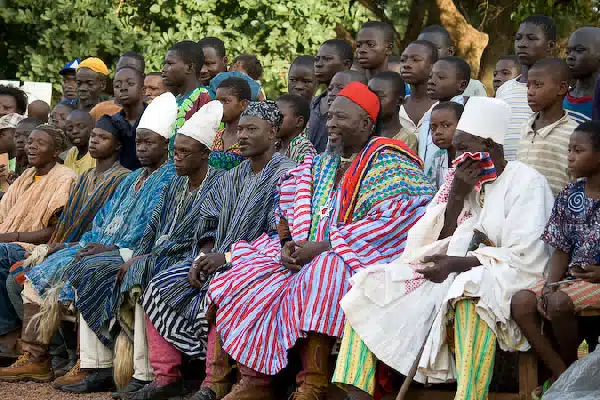
The Mamprusis are an ethnic group residing in northern Ghana and Togo. It is estimated that as of 2013, there were approximately 200,000 Mamprusis living in the Northern Regions of Ghana. They primarily speak Mampruli, which belongs to the Gur language family. In Ghana, the Mamprusis predominantly inhabit Nalerigu, Gambaga, Walewale, and the surrounding towns and villages in the North East Region. Although their origins can be traced back to the Upper East Region, particularly Bawku, they also have a presence in parts of the Upper West Region. The Mamprugu Kingdom, which predates all other kingdoms in the territory that would later become known as the Gold Coast and subsequently Ghana, holds a significant place in history. It was founded in the 13th century by the esteemed Naa Gbanwah/Gbewah, near a village called Pusiga, located 14 kilometers from Bawku. As a result, Mamprusis hold Bawku in high regard as their ancestral home, and Naa Gbanwaah’s tomb can be found in Pusiga. The kingdom stretches across the North East, Northern, Upper East, and Upper West Regions of Ghana, as well as portions of Northern Togo and Burkina Faso. To this day, the King of Mossi, Moronaba, in Burkina Faso, is symbolically enskinned by the Nayiri, the king of Mamprugu, further establishing the preeminence and authority of this kingdom. Mamprugu is the only kingdom in present-day Ghana whose influence and power transcend national boundaries, owing to its humble yet supreme significance. The name of the kingdom is Mamprugu, the people are referred to as Mamprusis, and the language they speak is Mampruli. Succession to the throne follows a hereditary system, and only male direct descendants of Naa Gbanwaah are eligible for the kingship. The Mamprusi monarchy traces its origins back to a revered warrior named Tohazie, known as the Red Hunter due to his fair complexion. Tohazie’s grandson, Naa Gbanwaah, settled in Pusiga and established the Mamprugu kingdom. The Mamprusis hold a significant position as the eldest among the Mõõre-Gurma (Mole-Dagbamba) ethnic group, which includes the Mamprusi, Dagomba, Nanumba, and Moshie communities. Their rich history, cultural heritage, and strong ties to their ancestral land continue to shape the identity of the Mamprusi people. READ NEXT ON: History of the Dagomba People
Why Kwame Nkrumah was buried 3 times

The notion of “you only live once” is a commonly expressed sentiment, highlighting the fleeting nature of human existence. In most cases, when someone passes away, their mortal remains are laid to rest through burial, cremation, or embalming, either for further study or as a means of preserving their memory for tourism purposes. However, the burial process for Ghana’s first President, Osagyefo Dr. Kwame Nkrumah, deviated from this norm, leading to an intriguing tale of multiple burials. It is often recounted that Dr. Kwame Nkrumah was buried three times, with one burial taking place in Guinea and two in Ghana. The first burial occurred in his hometown of Nkroful, and the second took place at the Kwame Nkrumah mausoleum, where his remains currently rest. Following Dr. Nkrumah’s death, his mortal remains were transported from Romania to Guinea, where he was interred in 1972 amidst a state funeral. Subsequently, there arose a desire in Ghana to repatriate his remains and lay him to rest in his home country. However, Guinea’s President at the time, Sekou Toure, initially displayed reluctance and imposed demanding conditions before agreeing to release the remains. Eventually, the embalmed corpse arrived in Ghana and was flown to Nkroful, his hometown, after a state burial ceremony held in Accra. However, the story did not end there. In 1992, twenty-two years after his second burial in Nkroful, President Flt. Lt. Jerry John Rawlings, envisioning a more fitting tribute to Dr. Kwame Nkrumah, arranged for a third burial. The spot where Dr. Nkrumah stood to declare Ghana’s independence in 1957 was chosen as his final resting place. In his honor, a memorial park, known as the Kwame Nkrumah Memorial Park, was erected. This park comprises a museum that showcases his legacy and a mausoleum that houses his remains, serving as a lasting tribute to his immense contributions to Ghana and the African continent. The extraordinary journey of Dr. Kwame Nkrumah’s mortal remains, from Guinea to his homeland of Ghana, reflects the profound respect and admiration held for him and his enduring impact on the nation’s history. READ NEXT ON: Why no Ashanti King crosses River Pra
Why no Ashanti King crosses River Pra

Legend has it that the reason no Ashanti King crosses River Pra can be traced back to a significant event in the history of the Ashanti kingdom. During the reign of Nana Osei Tutu I, the Ashanti kingdom was expanding its influence and power, asserting dominance over various Akan states. However, tensions escalated when the Ashanti kingdom attempted to subjugate the Akyems. In 1717, Nana Osei Tutu I, realizing that the Ashanti soldiers outnumbered those of the Akyems, saw an opportunity to conquer them. In preparation for war, he made a fateful decision. He left behind his magical amulets and his specially crafted body armor, which had been made for him by Nana Okomfo Anokye. Tragically, while crossing the River Pra in a canoe with his soldiers, the King met his untimely demise. Snipers and sharpshooters, concealed within the dense forest surrounding the river, unleashed a hail of bullets upon them. Nana Osei Tutu I was fatally struck by these hidden assailants. In his last moments, his dying words were “anka me nim a,” which translates to “if only I knew.” It was a poignant expression of regret, signifying his realization that he had underestimated the Akyems. As a result of this historic event, before any Ashanti King attempts to cross the River Pra, extensive rituals must be performed, and strict security measures must be put in place. These precautions are taken to ensure the safety of the reigning Asantehene, honoring the memory of Nana Osei Tutu I and serving as a reminder of the consequences of underestimating their adversaries. Thus, the tradition continues to this day, and no Asantehene dares to cross the River Pra without due preparation and reverence for the historical significance and lessons learned from the demise of Nana Osei Tutu I. READ NEXT ON: History of Akyem People
2023 Sankalp West Africa Summit Award Winners

The Sankalp West Africa Summit, the largest gathering in the Global South focused on impact entrepreneurship and sustainable development, successfully held its 1st Edition in Accra, Ghana on June 12-13. The summit, which took place at the UPSA Auditorium, showcased and celebrated high-impact enterprises from the African region, specifically those addressing crucial development challenges. The event provided a platform for the finalists to present their ventures to a distinguished panel of business leaders and investors. Among the ten remarkable finalist impact enterprises representing West Africa were notable startups in various sectors. Agriculture was well represented by Alcoford Corporation from Togo, Green Afro Palms from Ghana, and Kitovu Technology, Farm Corps, and Simkay Foods from Nigeria. Clean energy startups ShaQ Express and Sustainable Energy Technologies Ltd from Ghana, healthcare startup Drug-It Solutions from Nigeria, and circular economy startup Pad Up Creations from Nigeria were also part of the prestigious group. The top awards of the Sankalp West Africa Summit 2023 were presented to four exceptional young entrepreneurs whose innovative ideas have the potential to generate significant impact while addressing complex social challenges. The winner of the Sankalp West Africa Awards 2023 was Green Afro-Palms from Ghana, an agricultural startup engaged in sustainable oil palm farming and processing. Their efforts also include farmer sensitization programs to promote environmentally friendly practices in the oil palm industry. Kitovu Technology from Nigeria was recognized as the First Runner Up. This agri-startup specializes in building climate-smart farming and post-harvest infrastructure in Africa, providing smallholder farmers with decision support, tools, and resources to optimize productivity and income. ShaQ Express, Ghana’s first superapp, claimed the title of Second Runner Up. This technology company addresses the evolving needs and challenges of the e-commerce and logistics industry, with a mission to connect packages with people. In a distinct format, the ‘Sankalp Ecosystem Award’ was determined through a voting process involving practitioners from the developmental ecosystem. The award was bestowed upon Pad-Up Creation from Nigeria, a circular economy startup manufacturing washable and reusable sanitary pads as a sustainable solution for women and girls in Africa. Their innovative approach demonstrated how intent and innovation can significantly contribute to sustainability and social welfare. Arielle Molino, Sankalp Lead and AVP Intellecap Africa, expressed her satisfaction with the enriching experience of the Sankalp West Africa Awards 2023. She highlighted the incredible potential and business promise of the participating startups, emphasizing their ability to drive action, foster collaborations, and achieve positive outcomes. The event, supported by Visa Foundation, IDRC, Siemens, AFEX, Energy Catalyst, and Miller Center, attracted over 300 change-makers from the West Africa region. Sankalp Forum, initiated by Intellecap in India in 2009, aims to create a thriving ecosystem for business-led inclusive development. With 31 editions and over 2,000 showcased and discovered entrepreneurs, Sankalp has become one of the world’s largest impact enterprise-focused platforms. Through its connections to investors, Sankalp has facilitated funding of over USD 800 million and disbursed cash grants exceeding USD 1.2 million. The forum collaborates with governments, corporations, influential platforms, media, and civil society to drive a paradigm shift in inclusive development approaches. Intellecap, part of the Aavishkaar Group, is a pioneer in building enabling ecosystems and directing capital towards creating a sustainable and equitable society. With a presence in India and Africa, Intellecap provides a broad range of consulting, research, and investment banking services across critical sectors such as agriculture, livelihoods, climate change, clean energy, financial services, gender and inclusion, healthcare, and water and sanitation. Having engaged in over 700 global initiatives across 60+ countries and facilitated investments exceeding $1.1 billion, Intellecap partners with multilateral agencies, development finance institutions, social enterprises, corporations, investors, policymakers, and donors. Their common action platform, Sankalp Forum, plays a crucial role in shaping markets to achieve the Sustainable Development Goals (SDGs) by 2030. Notable clients of Intellecap include USAID, World Bank, Ford Foundation, The Hans Foundation, Doen Foundation, GIZ, DFID, Hindustan Unilever, P&G, International Finance Corporation, Asian Development Bank, and Michael and Susan Dell Foundation. READ NEXT ON: Ghanaian Teen innovator Mustapha Diyaol-Haqq wins $600,000 for developing Agric App
Top 5 Technology Trends Redefining The Fashion Industry

The fashion industry is no stranger to innovation, and in 2023, several technology trends are reshaping the way this industry operates. From enhancing sustainability practices to revolutionizing the shopping experience, here are the top five technology trends that are transforming the fashion industry: Augmented Reality (AR) in Virtual Try-Ons Augmented Reality has gained momentum in the fashion industry, providing consumers with virtual try-on experiences. Through smartphone apps or web-based platforms, customers can digitally superimpose clothing and accessories onto themselves in real-time, allowing them to visualize how an item would look and fit before making a purchase. This technology not only improves the convenience of online shopping but also reduces the likelihood of returns and contributes to a more personalized and engaging customer experience. Artificial Intelligence (AI) for Personalization and Customer Insights AI is revolutionizing the fashion industry by enabling personalized recommendations and enhancing customer insights. Machine learning algorithms analyze vast amounts of data, including customer preferences, browsing history, and social media interactions, to offer tailored product recommendations. AI-powered chatbots and virtual assistants also provide personalized customer support, helping users find the right products and answer their queries promptly. By leveraging AI, fashion brands can deliver hyper-personalized experiences, increase customer satisfaction, and drive sales. Sustainability and Circular Fashion Technologies As sustainability becomes a top priority for the fashion industry, innovative technologies are reshaping production processes and materials. Circular fashion technologies focus on reducing waste, recycling, and reusing materials. This includes using advanced recycling techniques to transform discarded garments into new fabrics, implementing digital platforms for clothing rental and swapping, and integrating blockchain technology to track and verify supply chain transparency. These sustainable practices not only reduce environmental impact but also resonate with consumers who are increasingly conscious of ethical fashion choices. 3D Printing and Customization 3D printing has disrupted the fashion industry by offering opportunities for customization and reducing waste. This technology allows designers to create intricate and unique pieces that were previously impossible with traditional manufacturing methods. It also enables made-to-order production, minimizing excess inventory and reducing the environmental footprint. Moreover, 3D printing facilitates the production of prototypes, reducing lead times and enabling faster iterations in the design process. Internet of Things (IoT) and Smart Wearables Internet of Things is making its way into the fashion industry through smart wearables. Connected devices embedded with sensors and technology enable consumers to track various aspects of their lives, including fitness, sleep, and overall well-being. From smartwatches to fitness trackers and smart clothing, these wearables provide personalized data, encouraging healthier lifestyles. Additionally, IoT technology enables brands to collect valuable insights on consumer behavior, preferences, and product usage, helping them improve their offerings and create targeted marketing campaigns. In conclusion, technology continues to reshape the fashion industry in 2023, with trends focusing on enhancing customer experiences, promoting sustainability, and driving innovation. Augmented Reality, Artificial Intelligence, and 3D printing revolutionize how consumers interact with fashion, while sustainable and circular fashion technologies contribute to ethical and eco-friendly practices. Furthermore, IoT and smart wearables provide new avenues for personalization and data-driven decision-making. By embracing these technology trends, fashion brands can stay ahead in a rapidly evolving industry and meet the changing demands of consumers. WHAT’S OUT THERE: Top 9 Technology Trends Reshaping The Fashion Industry In 2023 READ NEXT ON: Sustainable Fashion Revolution
Ghanaian Cuisine: Akple

Akple is a traditional Ghanaian dish that originates from the Ewe tribe in the Volta Region. This whitish-grey delicacy is typically shaped into spherical balls of varying diameters, depending on the individual it is being served to. The main ingredients used in its preparation are corn flour, cassava dough, salt, and water. It is traditionally eaten by hand and is commonly enjoyed with Okro soup, known as “Fetri Detsi” among the Ewe people. Preparation To prepare Akple, a deep stainless steel saucepan is used. Water is poured into the saucepan, filling it to approximately one-third of the desired final quantity. A few tablespoons of corn flour are added to create a light slurry, and the mixture is stirred over medium heat until it begins to boil. The flame is then lowered, and additional corn flour is gradually sprinkled in while stirring, until the slurry transforms into a dough-like consistency. Next, a wooden spatula is used to knead the dough until it becomes smooth. Any dough stuck to the sides of the pan is removed, and the dough is centered in the pan. Water is added around the “dough-in-pan-island,” nearly covering the surface. The pan is tightly covered and allowed to boil, ensuring even cooking and steaming of the dough within. The dough is kneaded with the spatula to incorporate the water, resulting in a smooth texture. This process of centering, watering, and kneading is repeated until the dough is soft and evenly cooked. It’s important to note that corn flour takes time to cook evenly, and to expedite the process, a well can be formed in the dough island and filled with water for faster and more even cooking. Once your Akple is ready, you can eat it with any sauce or soup. History Akple, also known as Banku, holds historical significance within Ghanaian cuisine. It originated from the Ewe people and has become a staple food in the country, particularly among speakers of Ga, Ga-Adangme, and Ewe languages. Variations of Banku exist among Ewe speakers in Togo and parts of Benin, with differences in dough ratios or minor additions. Examples include Akple, Akume or Wokumé, and Kom. “Akple” is a generic term encompassing various types of Akple. One type is “Amorkple,” which is a mixture of corn dough (Amor) and cassava dough (Agbeliemor). Another type is “Eworkple,” prepared solely with corn powder, as “ewor” means powder. This variation is sometimes referred to as “akpele” by non-Ewe speakers. Additionally, there is “Bakebake,” a combination of corn powder mixed with Agbeliemor and water, left overnight to be prepared the following day. The corn dough, known as “Amor,” takes more time to mature, whereas Bakebake is a quicker option. Lastly, “Amordemi” refers to Eworkple that is partially cooked and then mixed with other ingredients. In summary, Akple is a traditional Ghanaian dish that holds cultural significance among the Ewe tribe. Its preparation involves a careful process of cooking and kneading a mixture of corn flour and cassava dough. The variations of Akple reflect the diverse culinary practices within the Ewe community and contribute to the rich tapestry of Ghanaian cuisine. READ NEXT ON: Ghanaian Cuisine: Kenkey and Fish
Corporate Social Responsibility Communication

Corporate Social Responsibility (CSR) has become an increasingly important aspect of business operations in recent years. As organizations recognize the impact they have on society and the environment, they are embracing CSR initiatives to contribute positively and establish themselves as responsible corporate citizens. However, it is not enough to simply engage in CSR activities; effective communication of these efforts is crucial to ensure transparency, build trust, and foster long-term stakeholder relationships. CSR communication involves the dissemination of information about an organization’s social, environmental, and ethical practices, initiatives, and achievements. It encompasses both internal and external communication and serves multiple purposes, such as informing stakeholders, enhancing reputation, and influencing public opinion. Here are some key aspects of effective CSR communication: Transparency and Authenticity Transparent communication is fundamental in CSR initiatives. Organizations must be open and honest about their motivations, objectives, and progress in their CSR endeavors. Transparency builds trust and credibility among stakeholders, including employees, customers, investors, and the wider community. To ensure authenticity, organizations should align their CSR communication with their core values and business strategy, reflecting a genuine commitment to making a positive impact. Engaging Stakeholders Engagement with stakeholders is essential for effective CSR communication. Organizations should identify their key stakeholders, understand their interests and concerns, and tailor their communication strategies accordingly. Engaging stakeholders in dialogue and involving them in decision-making processes can strengthen relationships and generate valuable feedback. By actively involving stakeholders, organizations can demonstrate their commitment to social responsibility and gain insights into the most pressing issues to address. Clear and Consistent Messaging CSR communication should convey a clear and consistent message to stakeholders. The message should highlight the organization’s purpose, values, and the positive impact it aims to create. It is crucial to use plain language, avoiding jargon or technical terms that may confuse or alienate audiences. By using simple and accessible language, organizations can ensure that their CSR initiatives are understood by all stakeholders, regardless of their level of expertise. Multichannel Approach In today’s digital age, organizations have a multitude of communication channels at their disposal. A multichannel approach allows organizations to reach diverse stakeholder groups effectively. From traditional media outlets to social media platforms and corporate websites, organizations should leverage various channels to communicate their CSR efforts. The choice of channels should be based on the preferences of the target audience, ensuring that the message reaches the right people at the right time. Storytelling and Impact Narratives Effective CSR communication goes beyond facts and figures; it tells stories and highlights the impact of the organization’s initiatives. Storytelling humanizes the organization’s efforts, making them relatable and memorable. By showcasing real-life examples of individuals or communities benefiting from CSR programs, organizations can inspire stakeholders and generate empathy. Impact narratives create an emotional connection and help stakeholders understand the tangible difference the organization is making. Measurement and Reporting Measuring and reporting on CSR performance is essential to demonstrate accountability and progress. Organizations should establish key performance indicators (KPIs) aligned with their CSR goals and regularly track their performance. The results should be communicated transparently through comprehensive reports that highlight achievements, challenges faced, and future plans. External verification and certification can add credibility to these reports, assuring stakeholders of the organization’s commitment to CSR. Collaboration and Partnerships CSR communication should not be limited to self-promotion; it should also highlight collaboration and partnerships with external stakeholders. By showcasing alliances with NGOs, government agencies, or other businesses, organizations can demonstrate a collective effort towards addressing societal challenges. Collaboration adds value to CSR initiatives by pooling resources, expertise, and networks, ultimately leading to greater impact and sustainability. Continuous Improvement CSR communication is an ongoing process that requires continuous improvement. Organizations should actively seek feedback from stakeholders, evaluate the effectiveness of their communication strategies, and make necessary adjustments. The landscape of CSR is constantly evolving, and organizations need to stay informed about emerging issues and best practices in CSR communication to ensure they remain relevant and responsive. In conclusion, effective CSR communication plays a vital role in building trust, fostering stakeholder relationships, and enhancing the reputation of organizations. By embracing transparency, engaging stakeholders, and adopting a multichannel approach, organizations can effectively communicate their CSR initiatives and inspire positive change. By measuring, reporting, and continuously improving their CSR communication, organizations can demonstrate their commitment to corporate social responsibility and make a meaningful impact on society and the environment. WHAT’S OUT THERE: What is Corporate Social Responsibility (CSR) Communication READ NEXT ON: Corporate Communication in a Global Context
10 Design Best Practices for Social Media

Designing visually appealing and effective social media content is crucial for capturing the attention of your audience and conveying your brand’s message. Whether you’re creating graphics, videos, or infographics, following best practices can help enhance engagement and drive results. Here are ten design best practices for social media that can elevate your content and make it stand out from the crowd: Consistent Branding Consistency is key to building brand recognition and establishing a cohesive presence across social media platforms. Use consistent elements such as your logo, color palette, typography, and visual style to create a unified brand identity. This consistency helps users easily identify your content and builds trust. Clear and Readable Typography When selecting fonts for your social media designs, prioritize readability. Opt for clean and legible typefaces that are easy to read, even on smaller screens. Consider font sizes, spacing, and contrast to ensure that your text is clear and accessible to all viewers. Engaging Visuals Visual content plays a vital role in capturing attention on social media. Incorporate eye-catching images, graphics, and videos that are relevant to your message and resonate with your target audience. Use high-quality visuals that are visually appealing and aligned with your brand identity. Balanced Composition Composition is key to creating visually pleasing designs. Use design principles such as the rule of thirds, leading lines, and symmetry to guide your composition. Aim for a balanced arrangement of elements that directs the viewer’s attention and creates visual harmony. White Space Don’t be afraid of white space in your designs. White space, or negative space, refers to the empty areas between elements. It helps to improve visual clarity, highlight key elements, and create a clean and modern look. Give your content room to breathe and avoid overcrowding your designs. Consistent Color Scheme Establishing a consistent color palette is essential for maintaining brand identity and visual coherence. Choose colors that align with your brand and evoke the desired emotions. Use your color palette consistently across your designs to create a cohesive and recognizable visual identity. Clear Messaging Social media content often has limited space for text, so it’s important to convey your message concisely and effectively. Craft catchy headlines, brief captions, and use bullet points to communicate your main points. Make sure your messaging is clear, impactful, and aligned with your brand voice. Mobile-Friendly Design With the majority of social media users accessing platforms via mobile devices, it’s crucial to optimize your designs for mobile viewing. Ensure that your visuals are responsive and look great on different screen sizes. Test your designs on various devices to ensure a seamless and enjoyable user experience. Call-to-Action (CTA) Incorporate clear and compelling calls-to-action in your social media designs. A CTA prompts users to take the desired action, such as clicking a link, making a purchase, or engaging with your content. Use visually prominent buttons or text that stands out to encourage users to act. Test and Iterate Continually analyze the performance of your social media designs and iterate based on user engagement and feedback. Experiment with different design elements, formats, and messaging to optimize your content. Regularly monitor social media analytics to gain insights into what resonates best with your audience. By following these design best practices, you can create visually appealing and engaging social media content that grabs attention, effectively communicates your message, and reinforces your brand identity. Remember to stay up-to-date with the latest design trends, experiment with new ideas, and adapt your designs to suit the preferences of your target audience. Continuously evolving your social media designs will help you stay relevant and maximize the impact of your content. READ NEXT ON: Impactful Social Media Graphics: The Power of Visual Storytelling
Why You Should Be Part of Voluntarius Opus’23
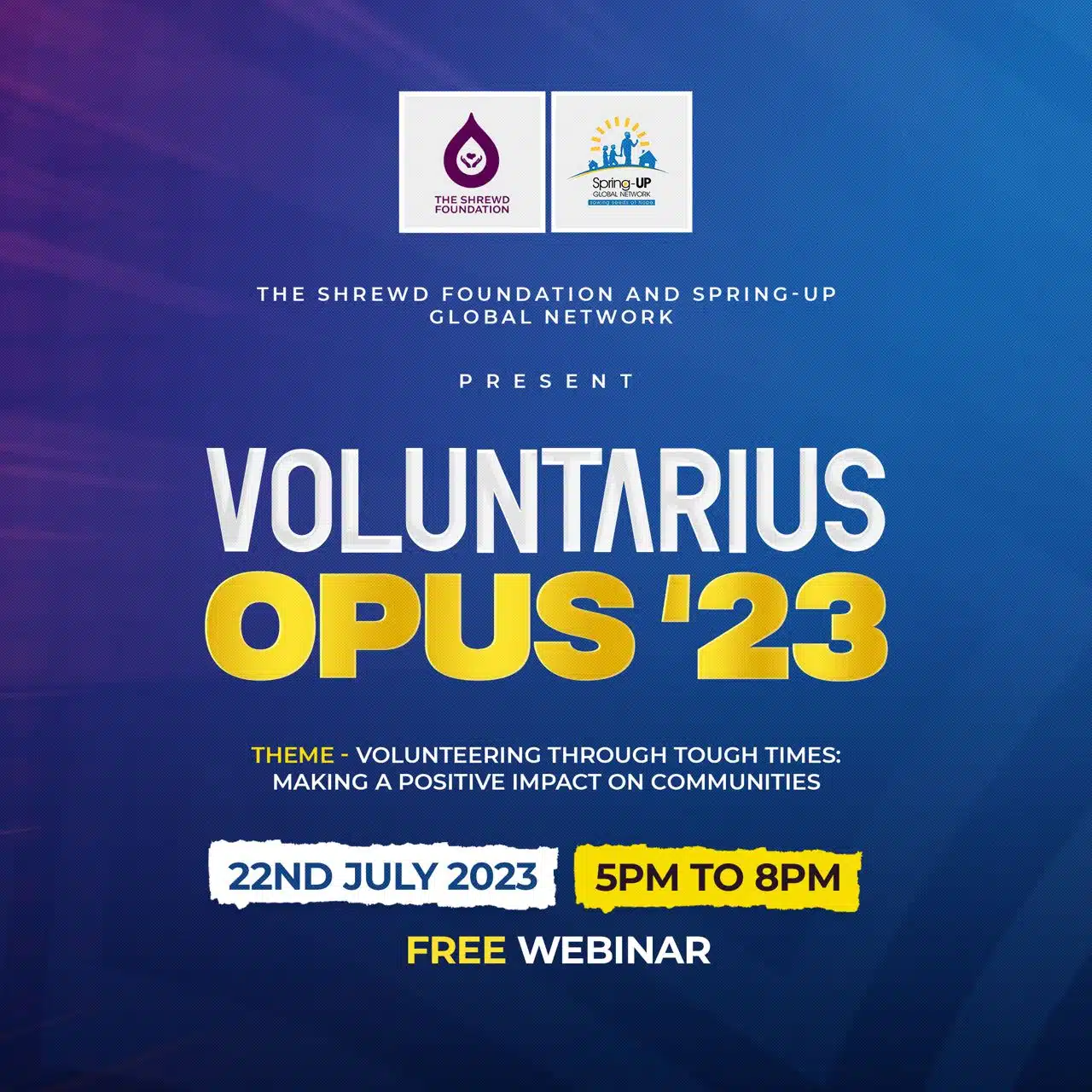
Volunteering has always played a crucial role in society, but its significance becomes even more evident during challenging times. Voluntarius Opus’23 organized by Spring-Up Global Network and The Shrewd Foundation, is set to inspire and empower individuals to make a positive impact on their communities. With the theme, “Volunteering through tough times: making a positive impact on communities,” this year’s seminar aims to shed light on the transformative power of volunteering and the invaluable contributions volunteers can make even in the face of adversity. Voluntarius Opus has established itself as a premier event that brings together volunteers, community leaders, and organizations dedicated to social change. The seminar serves as a platform to exchange ideas, learn from distinguished speakers, and showcase the incredible work accomplished through volunteerism. The chosen theme for this year’s Voluntarius Opus, “Volunteering through tough times: making a positive impact on communities,” resonates deeply with the challenges faced by societies worldwide. It highlights the need for volunteers to step up and be the driving force behind positive change, even in the most difficult circumstances. The speakers at the event will explore various aspects of this theme, providing valuable insights and inspiring stories of resilience, compassion, and community engagement. Voluntarius Opus’23 aims to inspire attendees to overcome obstacles and find innovative solutions through volunteering. Distinguished speakers from diverse backgrounds will share their experiences, knowledge, and expertise, providing a wealth of inspiration to those seeking to make a difference. Through their stories, attendees will gain a deeper understanding of the transformative power of volunteerism and its potential to create lasting change. Apart from the enlightening sessions delivered by the speakers, Voluntarius Opus offers a multitude of learning and networking opportunities. Attendees will have the chance to connect with like-minded individuals, passionate volunteers, and representatives of organizations committed to community development. Through these interactions, participants can forge valuable partnerships, share best practices, and explore collaborative initiatives to amplify their impact. Voluntarius Opus’23 serves as a powerful call to action, urging individuals to embrace the spirit of volunteering and contribute to their communities, no matter the circumstances. It reinforces the notion that even in the face of adversity, volunteers possess the power to uplift, support, and bring positive change to those in need. The seminar will equip attendees with the tools, knowledge, and inspiration needed to make a tangible difference. Voluntarius Opus’23 represents a significant milestone in the journey of volunteering and community engagement. With the theme of “Volunteering through tough times: making a positive impact on communities,” this seminar will empower individuals, foster collaboration, and highlight the transformative potential of volunteerism. As attendees gather to exchange ideas and experiences, the event will ignite a renewed commitment to serve and inspire a wave of positive change that extends far beyond the seminar itself. Let us join hands and make a difference together through the power of volunteering. WHAT’S OUT THERE: Volunteering and its Surprising Benefits READ NEXT ON: Why I Take Care of Street Children Through The Shrewd Foundation